
October 11, 2026
Black Narcissus, the Flying Skunk
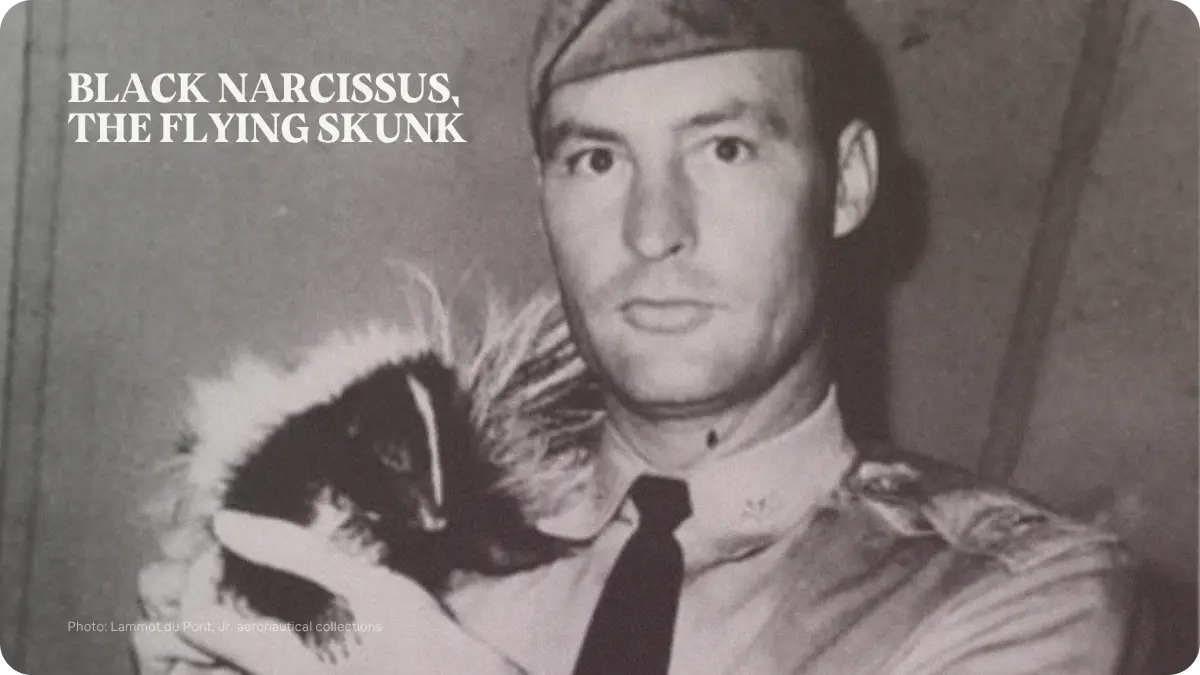
In 1936, a four-month-old skunk became an unlikely flying mascot of the U.S. Army Air Corps.
In September 1936, a four-month-old skunk named Black Narcissus had already logged 17 hours in the air.
Black Narcissus was the unofficial mascot for Lieutenant Douglas T. Mitchell from the U.S. Army Air Corps, flying with the 77th Pursuit Squadron based at Barksdale Field in Shreveport, Louisiana.

There was just one little issue with having a skunk on a plane: he had a trip to an Army surgeon first. A newspaper back then reported that this young skunk got “de-skunked,” meaning they surgically removed his scent glands. It was to make him a better flying companion for the airmen, especially in the cramped space of an aircraft.
Once that was all sorted out, Black Narcissus took to the skies. By September, he had logged 17 flying hours, enough to catch the attention of the national press.
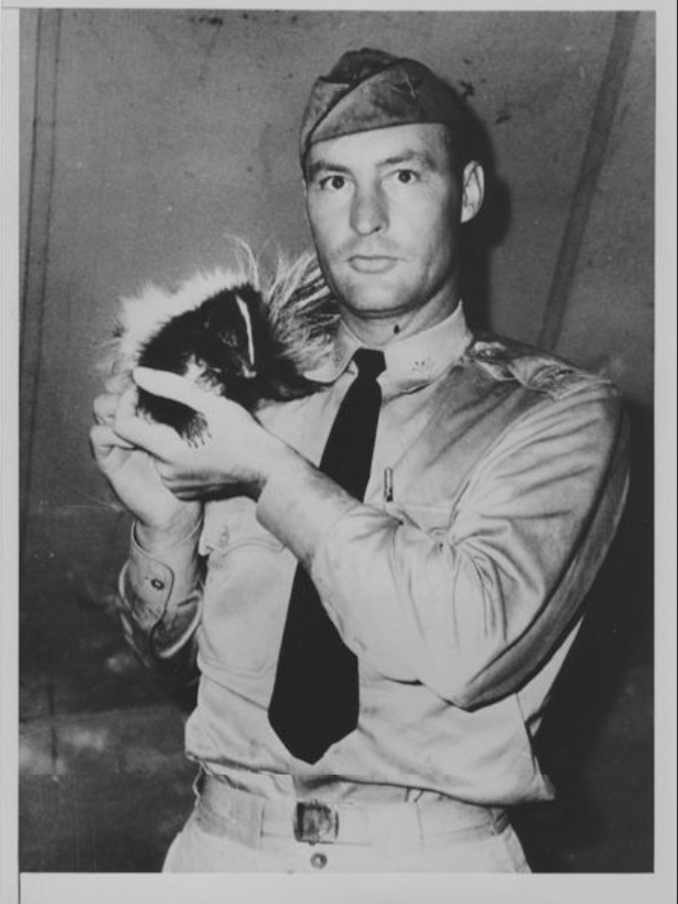
On September 10, 1936, he was photographed in Lieutenant Mitchell's arms at Shushan Field, a temporary Army air base in New Orleans. Acme Newspictures distributed the photograph, and it appeared in newspapers nationwide, introducing readers to one of the more unusual mascots in American military aviation.
The surviving caption tells us his name, age, owner, squadron, and flying experience. It doesn't explain how Mitchell came to own a skunk, what Black Narcissus did during his flights, or whether he continued flying after the photograph was taken.
What happened to him later is still a bit of a mystery, too. But for a short time in 1936, a young skunk made headlines for doing something most skunks would never get to do: at four months old, Black Narcissus already had 17 hours in the air.
Share this story
Animals at war
More stories
Furrend circle
Be the first one to hear about updates
