
May 12, 2026
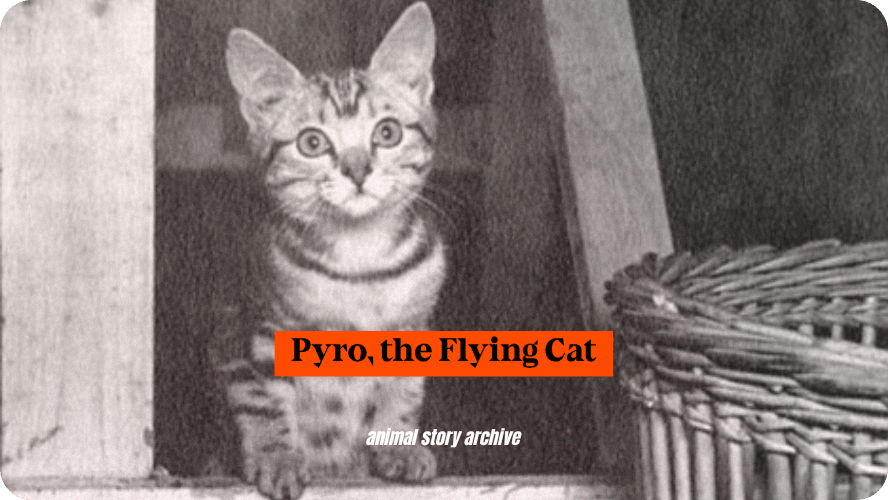
Pyro the Flying Cat
During World War II, a tabby cat named Pyro flew alongside RAF crews on dangerous bombing tests, keeping airmen company high above the Atlantic.
During World War II, a tabby cat named Pyro regularly flew at 20,000 feet inside the flight jacket of an RAF photographer.

Pyro began his RAF "flying cat" career at the Marine Aircraft Experimental Establishment in Helensburgh, Scotland, where photographer Bob Bird found the kitten wandering through his darkroom looking for warmth. It was 1942, and one day, Pyro injured his tail in a sliding door accident. Bird took him to the base medical officer, and somewhere along the way, a stray kitten became the station’s mascot and lucky charm.
He was named after pyrocatechol, one of the chemicals used in photographic developing. The name sounded technical enough to belong there.
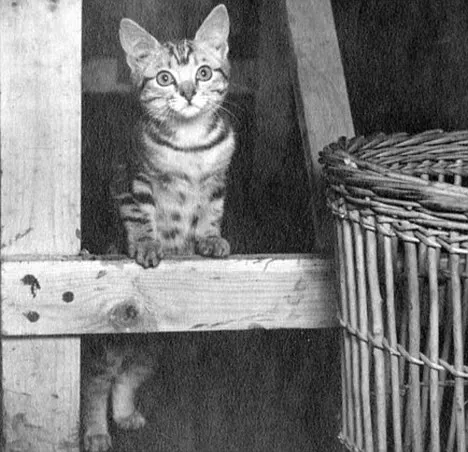
Soon, Pyro started accompanying Bird on flights documenting experimental missions. Bird photographed the trials of torpedo bombs and the Tallboy bombs later used against German U-boats and the battleship Tirpitz. According to Bird’s family, the cat hated being left behind and would come running whenever he heard the whistle that signaled another mission.
The Royal Air Force missions involved experimental bombing tests over the Atlantic, including flights connected to the development of the famous “bouncing bomb” later used in the Dambusters raid. The crews were young, the work was dangerous, and accidents were common enough that superstition settled naturally into airmen's daily life.
Pyro was tucked inside Bird’s heavy flight jacket and flew over the Atlantic alongside crews testing weapons and equipment under conditions that were often freezing, exhausting, and deeply unpredictable. The men believed he brought luck, and more importantly, he brought comfort.
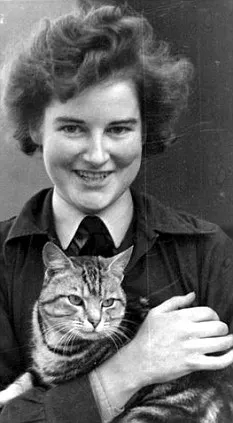
One winter mission in early 1943 turned that comfort into something more practical. Flying at around 20,000 feet, Bird removed a glove to change a camera lens while ice built up across the aircraft. Temperatures inside could drop to between -40°F and -60°F (-40°C to below -50°C), and the cold quickly became severe enough to damage his hands. He used the warmth from Pyro inside his jacket to keep his fingers from freezing completely.
And the situation became worse when the aircraft crash-landed in the sea off Scotland’s west coast after the pilot was temporarily blinded by frostbite. Through all of it, Pyro stayed where he was.
Bird later spent weeks recovering in the hospital, and the doctor told him Pyro helped save his fingers.
After that mission, Pyro’s place with the crews seemed fully earned. He continued flying through the war years as the missions carried on and the technology changed around him. By 1945, Bird had been transferred south to RAF Beaulieu in Hampshire, and of course, Pyro went with him.
Pyro's story ended in May 1945. While Bird was away from the base, Pyro was struck by an RAF truck and killed.
According to Bird's son Robin, Bird spoke about the cat for the rest of his life with genuine affection, not as a mascot or novelty, but as a companion who had shared some of the most dangerous moments of the war beside him.
Decades later, in 2013, Pyro received a posthumous commendation from the PDSA for bravery.
There are larger stories from World War II, filled with squadrons, operations, and machines built to change the course of history. And then there's a tabby cat curled inside a flight jacket somewhere above the Atlantic, keeping a freezing airman company in the dark.
Share this story
Animals with jobs
More stories
Furrend circle
Be the first one to hear about updates
