
People and Their Animals Artists
Artist · New Paltz, New York
Carolee Schneemann and Her Cats
For the experimental artist, cats were more than just companions. They were collaborators, subjects, and sometimes the inspiration behind her work.
In a 2017 interview, Carolee Schneemann said her cat, La Niña, helped herself to the artist's espresso, dipping a paw into the cup, licking it, and going back for more. Artsy reported that Schneemann explained La Niña liked her coffee without milk or sugar.
- Person
- Carolee Schneemann
- Animals
- Kitch, Cluny, Vesper, La Niña, and others across decades
- Works
- Fuses, Kitch’s Last Meal, Infinity Kisses
- Place
- New Paltz, New York
- Known for
- Treating cats as collaborators who watched, kissed, and sometimes made marks of their own
Kitch, the cat who watched everything
Schneemann grew up with cats and continued living with them throughout her career. One of the most important was Kitch, a gray cat she shared with the composer James Tenney in the 1960s.
Kitch was always around, watching what the couple did. Her unselfconscious presence helped inspire Fuses, Schneemann's experimental film about intimacy and her relationship with Tenney.
Schneemann wondered what their relationship might look like through the eyes of a cat who observed everything without embarrassment.
Our cat, Kitch, took this branch as a walkway from inside to outside. That was another key for me, my cat physicalized a dimensionality I needed. I was painting landscapes outside and bringing them in… Carolee Schneemann in conversation with Alison Knowles · The Brooklyn Rail
Kitch also accompanied her to London. Schneemann recalled smuggling her into the country and persuading her landlords to accept the cat because she was so special.
Later, as Kitch grew old, Schneemann began filming her daily life. The resulting work, Kitch's Last Meal, became a five-hour film diary, documenting the cat's final years alongside the artist's own life.
Cluny and the morning kisses
Years later, another cat named Cluny developed an unusual morning routine.
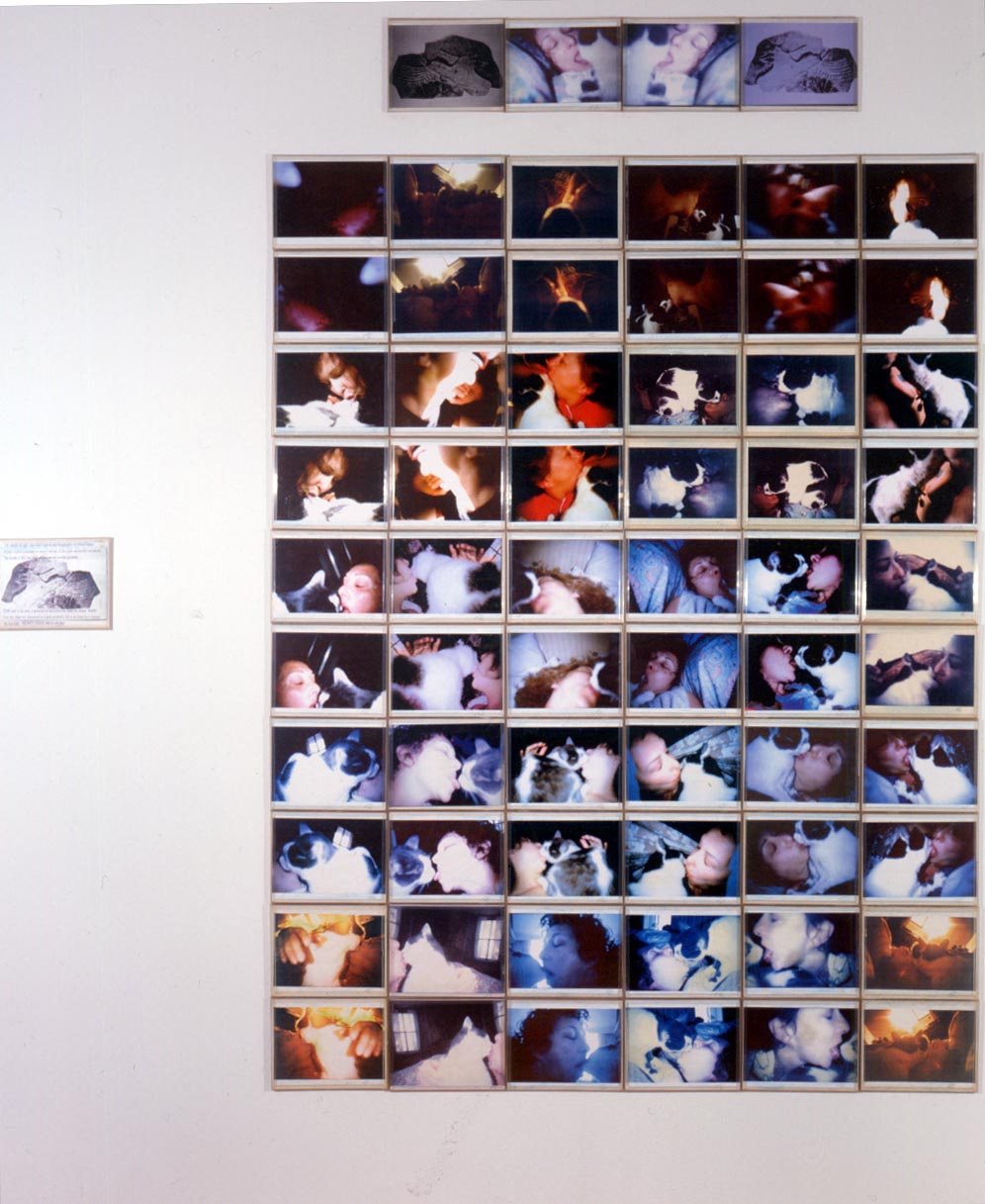
As a kitten, Cluny climbed onto Schneemann, placed his paws around her neck, and kissed her on the mouth.
Schneemann began keeping a camera beside her bed to photograph these greetings. The lighting and framing were unpredictable, but that was part of the process.
Over several years, the photographs accumulated into Infinity Kisses, a series exploring the physical closeness between a woman and her cat.
Cluny died in 1988. Later, another cat named Vesper continued the kissing ritual, and Schneemann continued photographing it. The photographs eventually entered the collection of the San Francisco Museum of Modern Art.
The cats had their own ideas
Schneemann didn't think of her cats as passive subjects.
She spoke about their intelligence, independence, and the ways they influenced her work. In one interview, she jokingly imagined Vesper examining the photographs spread across her studio floor and declaring them his best work.
Her cats were also perfectly capable of making art without her. Kitch once got hold of shoe polish and a brush and produced something of her own.
And when Schneemann wasn't working, the cats were still there. They slept beside her, walked with her in the woods, and kept her company in the old farmhouse in New Paltz, New York, where she lived and worked for decades.
By the time La Niña was dipping her paw into that espresso in 2017, Schneemann had spent more than half a century making art with cats somewhere nearby.
Some appeared in films. Others became the subject of photographs. A few simply watched her work.
All of them had their own lives, and Schneemann was interested in those, too.
In the work
Cats appear in Schneemann’s films and photo series not as props, but as observers and collaborators.
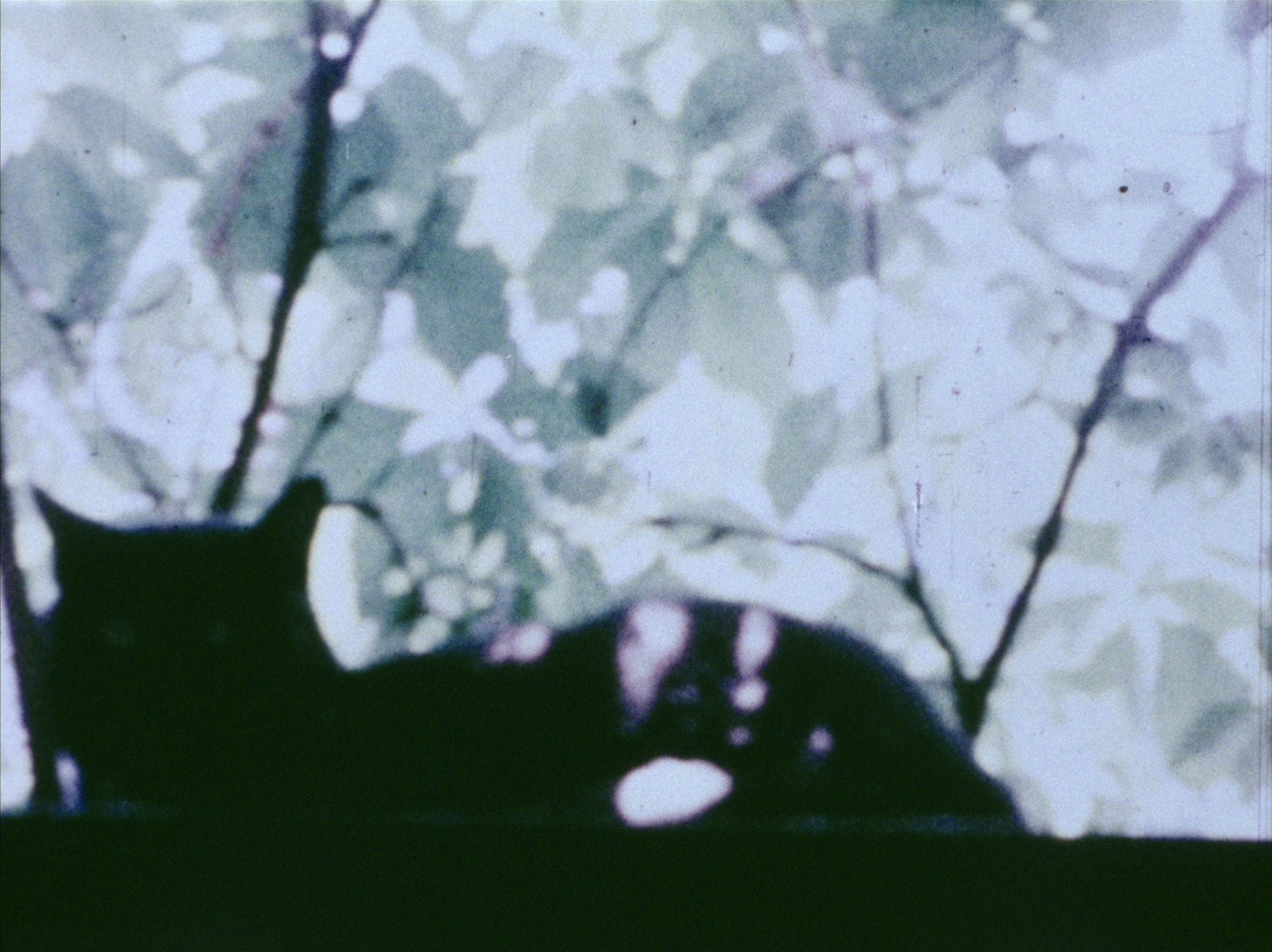
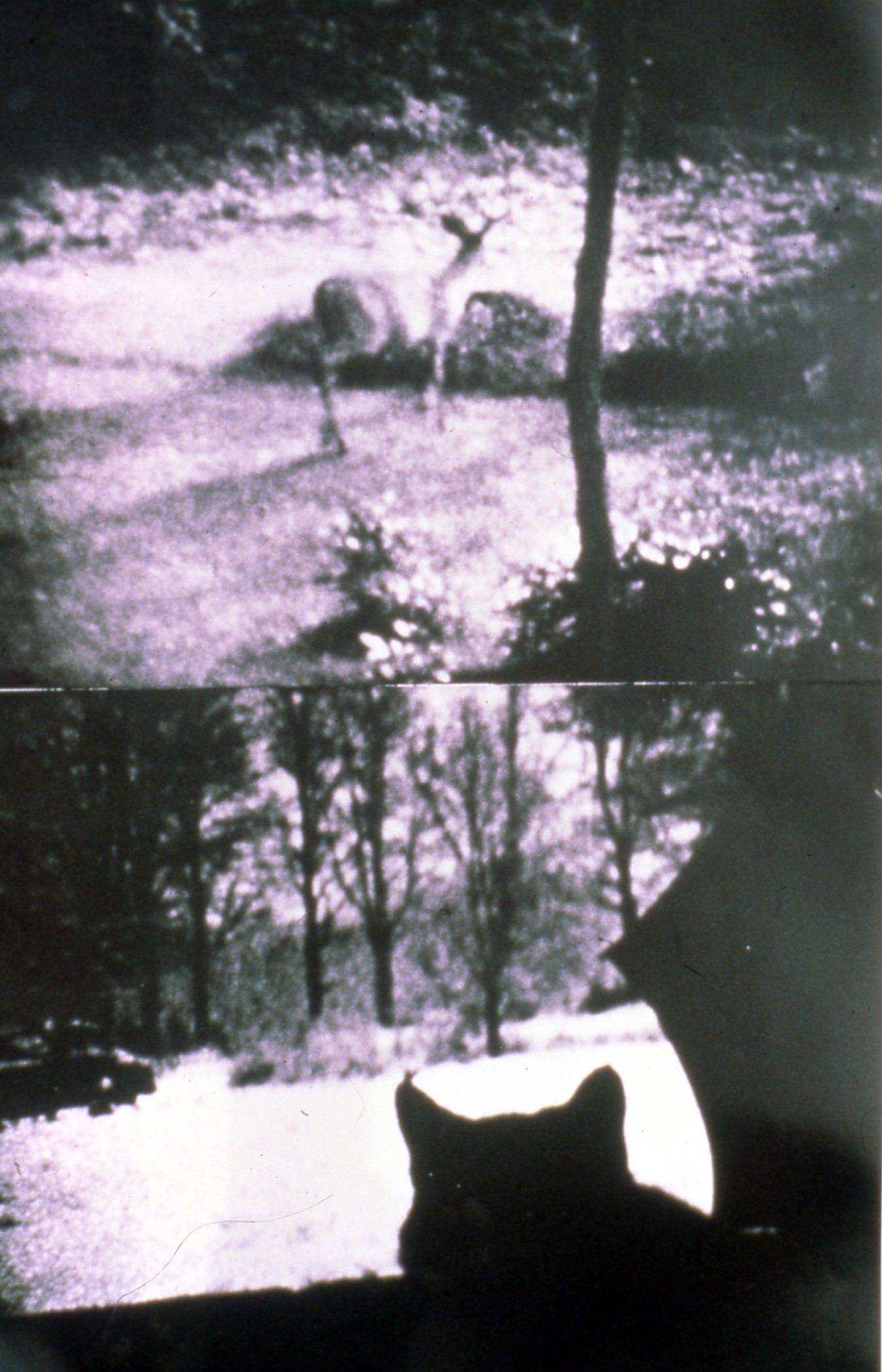
Artwork images via the Carolee Schneemann Foundation oral history and artworks archive.
Around the studio
Between films and photo series, the cats were simply there — on laps, desks, and windowsills in New Paltz.
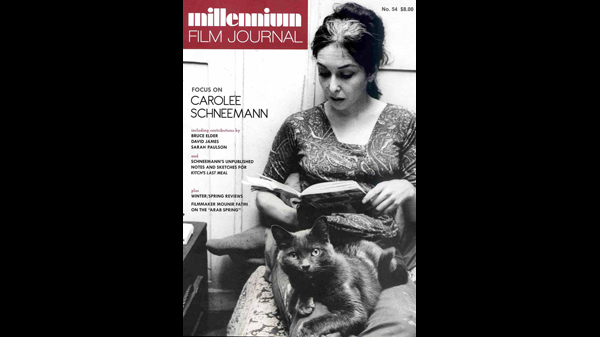
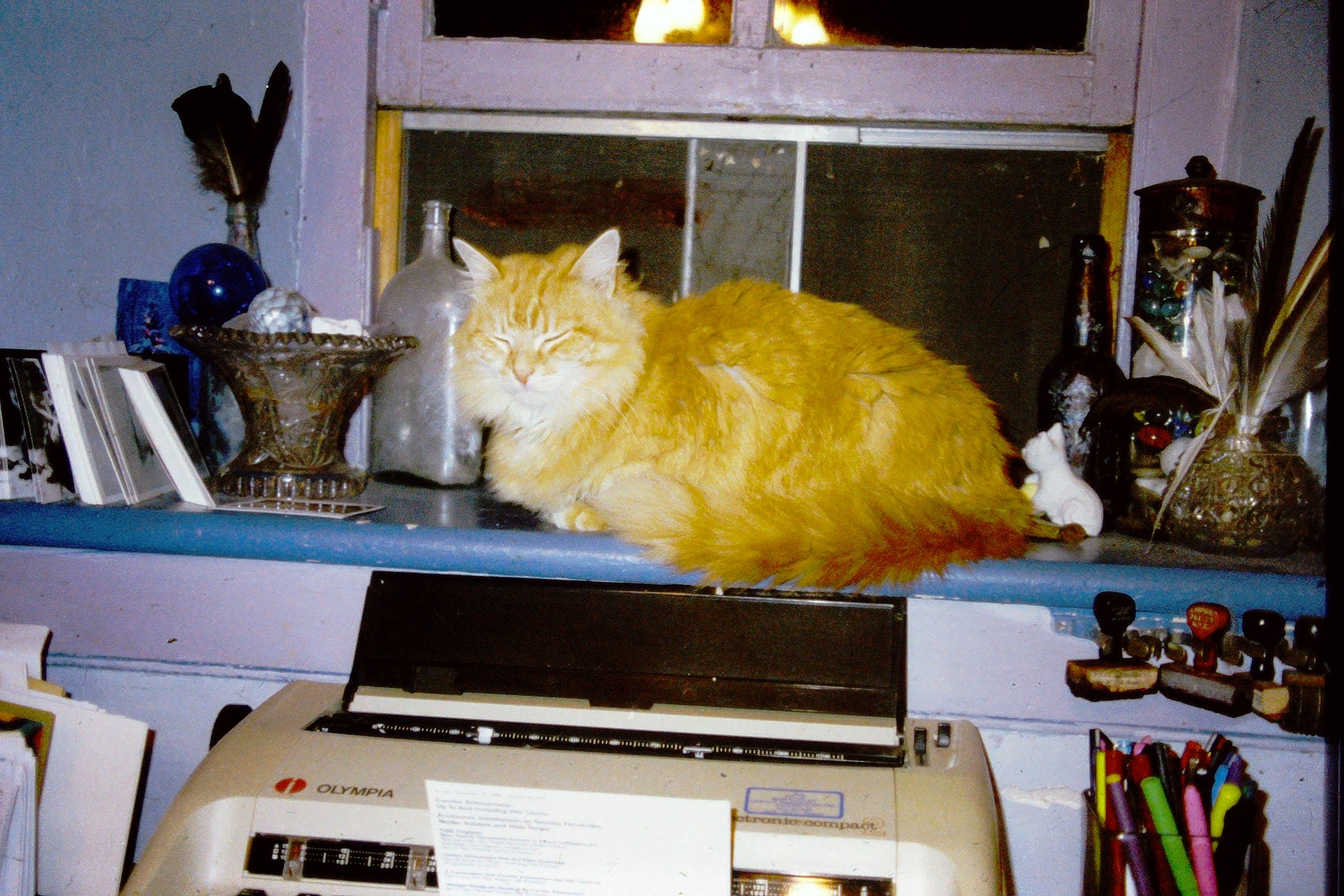
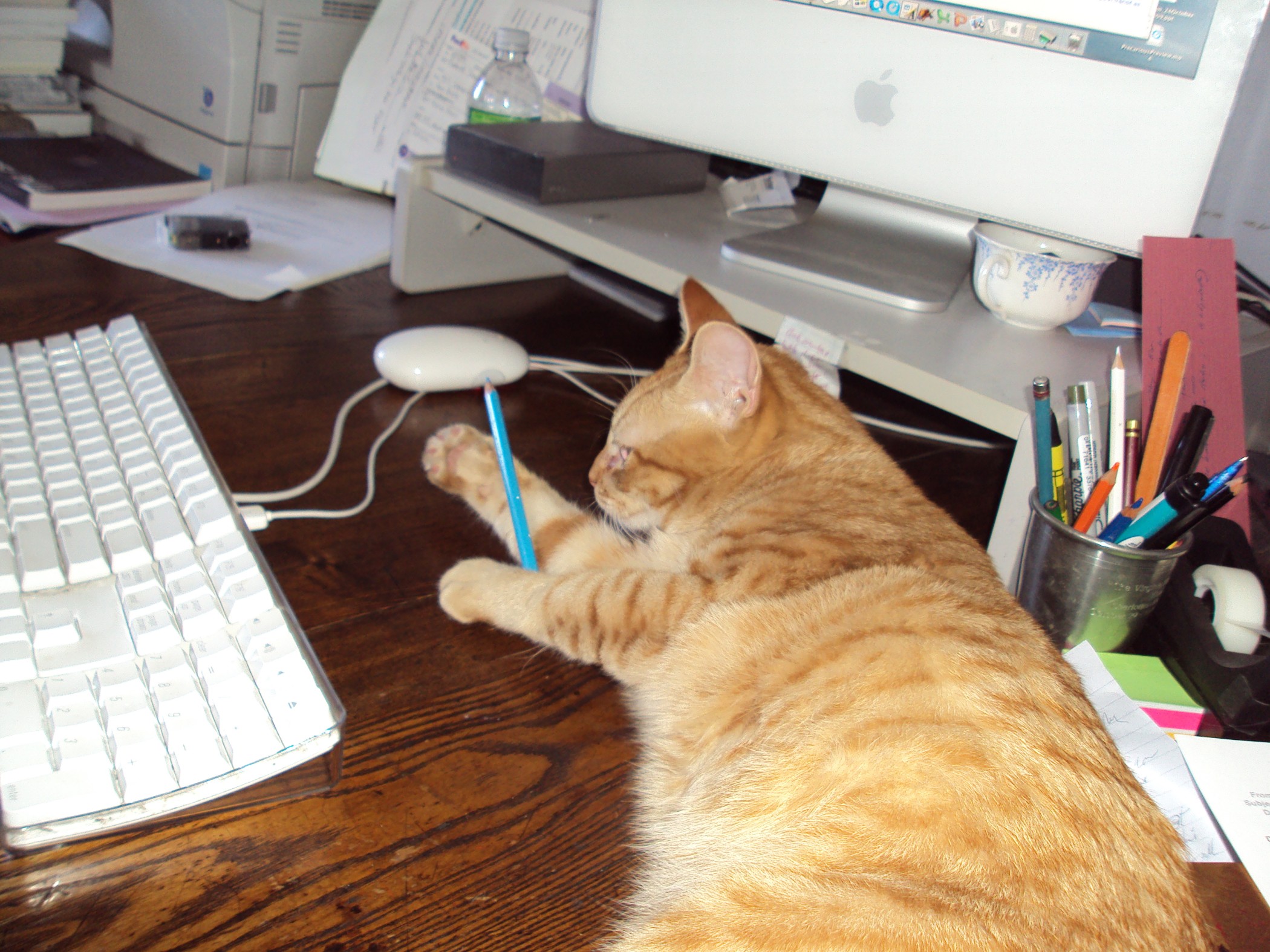
Studio photographs via the Schneemann Foundation oral history project; journal cover courtesy LUX.
Share this story
