
October 1, 2026
Billy, the RAF Goat John Steinbeck Wrote About
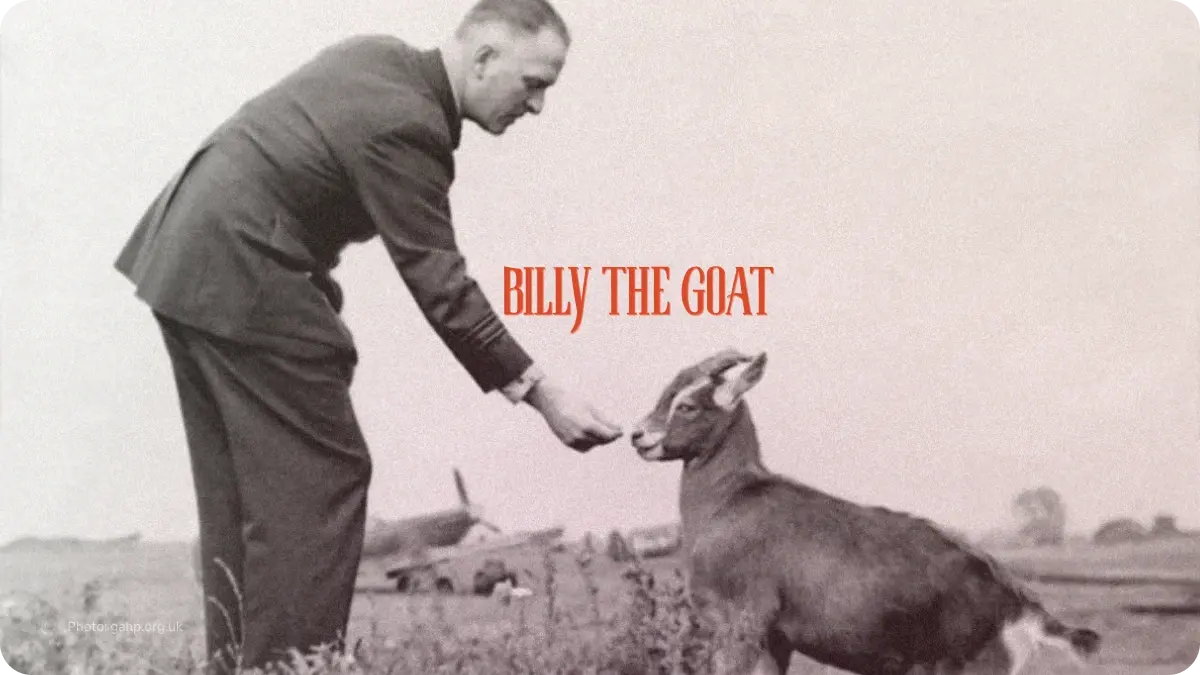
No. 609 Squadron fought in intense World War II battles and had a goat named Wing Commander William Goat, D.S.O.
In the summer of 1943, John Steinbeck visited an RAF fighter squadron and found much to write about. No. 609 Squadron had already participated in the Dunkirk evacuation and the Battle of Britain. At the time, its pilots flew Hawker Typhoons on missions over occupied Europe. Later, the squadron would also play a role in supporting the Normandy campaign.
Steinbeck chose to write about their goat, humorously named Wing Commander William Goat, D.S.O., but everyone just called him Billy.

The wing commander
Billy had joined the squadron a couple of years earlier when he was still young. By 1943, he had earned a rank, and his decorations were painted brightly on his horns. He even had his own little house behind the Operations Room, proudly displaying his name and honors above the door.
The pilots really believed Billy brought them good luck. Before departing on missions, they would stop by to give him some pets and rub his horns. One time, when the squadron moved to another base and accidentally left Billy behind, the men became nervous and irritable without him. They eventually sent a special aircraft back to collect the goat.
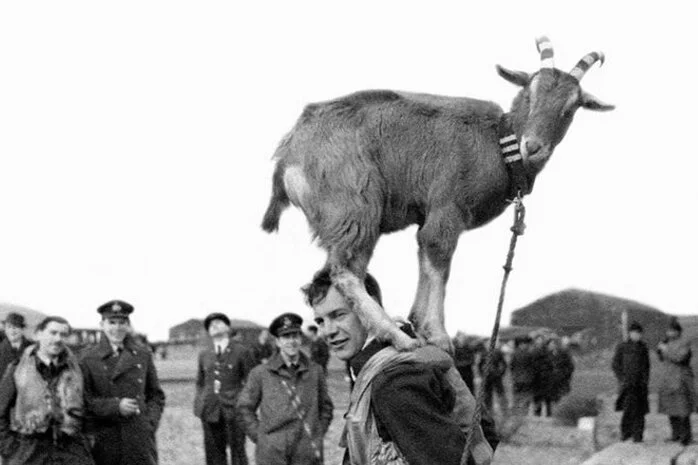
According to Steinbeck, everything improved upon Billy's arrival, from the quality of food to the men's stomach issues. Billy really liked beer, like a lot. Steinbeck said that when Billy drank enough to get a little tipsy, he would stroll around the airfield, "sneering" at different people and things.
Billy had a real passion for food. There's a story about how he was left alone at a party for a little while and ended up munching his way through a ton of sandwiches and cake, some sheet music, and half a bowl of punch. As an RAF goat, he also developed a fascination with aviation.
When someone brought out an oxygen tank, Billy seemed to know what to do. Steinbeck saw him put his mouth over the outlet and breathe deeply until his sides expanded, then let go and started bouncing around with a burst of energy. He also had a habit of licking the dripping glycol coolant from the squadron's Typhoons, which wasn't exactly the safest idea.
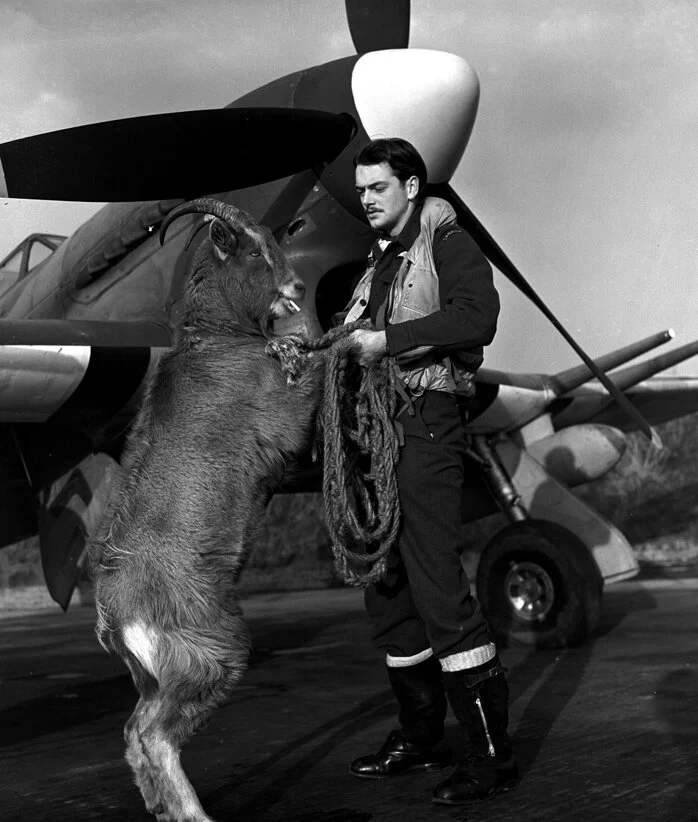
John Steinbeck meets Billy
Steinbeck arrived at RAF Manston on June 29, 1943, while working in Europe as a war correspondent. That day was packed for the squadron with patrols, attacks on ships, bad weather, and dealing with anti-aircraft fire. But even with all the chaos going on, they still noted that American author John Steinbeck paid a visit. He ended up writing a whole story about a goat named Billy.
Steinbeck wrote about the goat with the same seriousness normally reserved for a senior officer. He went into detail about his rank, living conditions, drinking habits, and how important he was for keeping spirits up. This piece later appeared in his collection of wartime writings, Once There Was a War.

Underneath the humor, there's a real story: No. 609 Squadron was right in the action throughout the war. Its pilots participated in the evacuation of Dunkirk and the Battle of Britain, and by the time Steinbeck met Billy, the squadron was regularly conducting dangerous operations across the English Channel. They later supported the Allied landings in Normandy and continued the fight across Europe.
Billy stayed at the airfield. Steinbeck mentioned that he didn’t fly on missions because there wasn’t enough room for a goat in a Typhoon. But the men in the squadron would visit him before every mission, take him along when they moved, and even give him a rank higher than most of theirs.
For a group of people living around aircraft, dealing with the stress of operations, and the chance that someone might not come back, having a goat around really seemed to provide comfort. And when one of America's most famous writers came to document their lives, Billy became the focus of the story.
Share this story
Animals at war
More stories
Furrend circle
Be the first one to hear about updates
