
September 16, 2026
The Animals Who Lived at the White House
The White House has been a home. Animals lived there too.
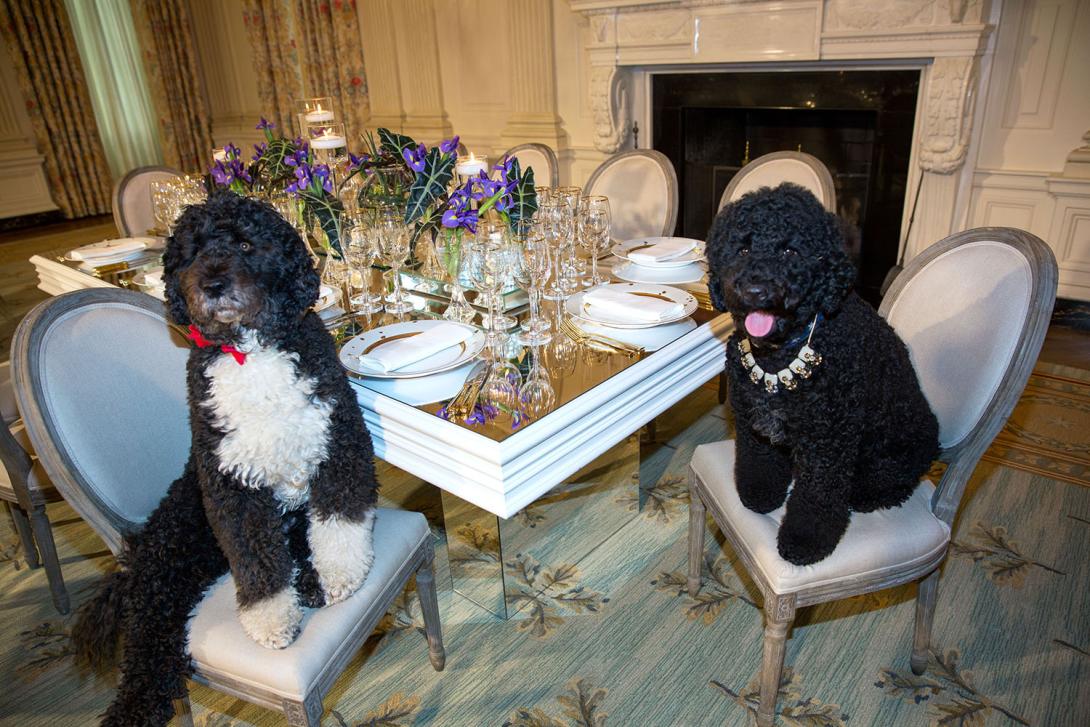
Sunny arrived at the White House in 2013 and immediately made herself at home. She chased squirrels and birds across the South Lawn, jumped over hedges like they weren’t even there, followed staff around while they went about their day, and kept a close eye on her older brother, Bo. She preferred people to most other dogs, drank water loudly and messily, and, despite being a Portuguese Water Dog, absolutely hated getting wet.
The Obama family recently shared the sad news that Sunny passed away at 13, after spending over a decade as part of their crew. The White House has seen many animals come and go over the years.
For over 200 years, the White House hasn’t just been an office, museum, or the place where presidents make speeches. It’s been a home where families have lived, kids have grown up, and animals have tag-teamed along with them. Dogs have slept in its rooms, cats have roamed the grounds, sheep have helped with the lawn care, a cow provided the milk, and there was even a raccoon that showed up because someone thought she’d be a good idea for Thanksgiving dinner.
Here are some of the animals who called the White House home.

Bo and Sunny
When Barack Obama talked about getting his daughters a puppy in his 2008 victory speech, they ended up with Bo, a Portuguese Water Dog, who joined the family in 2009. Four years later, they adopted Sunny.
The two pups became a big part of life at the White House, showing up at Easter Egg Rolls, holiday parties, and hanging out with the Obama family on the South Lawn. They had pretty different personalities, though. Bo could usually be won over with a treat, while Sunny preferred attention, running around and convincing people to rub her belly for as long as they could.
Sunny was also very protective of Bo, who the family joked wasn’t always the most alert dog. Bo passed away in 2021, but Sunny stuck around for another five years, still described by the Obamas as “fiery and gorgeous” right until the end. The White House gets new residents every few years, and some of them leave paw prints behind.
Socks
Long before Socks had photographers waiting for him on the White House lawn, he was a stray kitten living under a porch in Little Rock, Arkansas. Chelsea Clinton's piano teacher found two kittens there, and the Clintons adopted the black-and-white one with white paws, which they named Socks.
When Bill Clinton became president in 1992, Socks came along. Suddenly, this regular stray cat had a whole press corps following him. He loved exploring the White House grounds, and photographers quickly learned that getting him to pose was just as tricky as getting any cat to cooperate. According to the Clinton Presidential Library, members of the press sometimes used catnip to lure him into the right spot for shots.
Socks became one of the most famous White House pets of the '90s, appearing at events, visiting schools and hospitals, and getting so much fan mail that the staff had to help answer letters that were addressed to him. Not bad for a cat found under a porch.

Rebecca
Rebecca's journey to the White House was definitely less conventional. In 1926, a supporter in Mississippi sent President Calvin Coolidge a raccoon, suggesting that the family might want to have her for Thanksgiving dinner. Instead of that, the Coolidges decided to keep her and named her Rebecca.
By Christmas, Rebecca got a fancy embroidered collar that labeled her the “White House Raccoon,” and she moved into a little house on the White House grounds. First Lady Grace Coolidge even walked her on a leash, although Rebecca apparently had a habit of escaping staff and climbing trees until she decided she was ready to come down.
Rebecca had arrived at 1600 Pennsylvania Avenue as dinner. She left as one of its more memorable residents. Rebecca came to 1600 Pennsylvania Avenue as dinner, but left as one of its more memorable residents.

Pauline Wayne
For a few years, the White House had its own milk cow named Pauline Wayne. She was a Holstein cow that President William Howard Taft received as a gift from Wisconsin senator Isaac Stephenson in 1910. Pauline lived right on the White House grounds and supplied milk for the Taft family.
Having a cow at the White House wasn’t as weird back then as it sounds now. There had been livestock around before, and the grounds were a lot more practical than the fancy South Lawn we see today. But Pauline really became a star.
Newspapers wrote about her, visitors came to see her, and there were plenty of photos of her munching on grass around the place. One time, when she was being taken to a dairy show, she got lost at a train station, and there was a short panic over the president’s missing cow. But they found her, and milk service was back on track.

The sheep on the South Lawn
During World War I, President Woodrow Wilson had to deal with a pretty typical household issue, but on a grand scale: someone needed to mow the White House lawn. His solution had four legs.
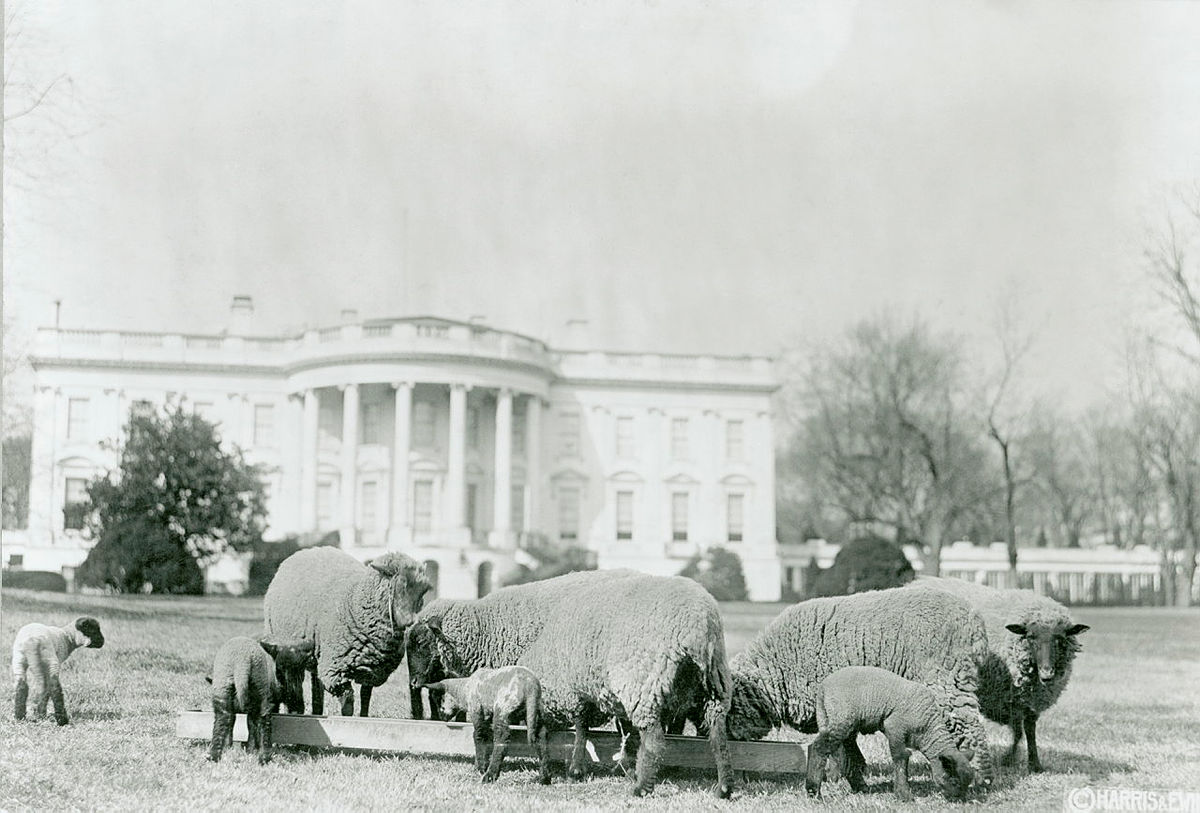
In 1918, they brought a flock of sheep to graze on the South Lawn, which helped cut down on the people needed to keep the grass tidy during the war. The flock eventually expanded to 48 sheep.
But that wasn't all they did. Their wool was sold off to raise funds for the American Red Cross, turning the task of lawn care into a way to support the war effort.
Pictures from that time show sheep lounging around on the familiar South Lawn with the White House behind them, making it look less like a government hub and more like a fancy farm for a moment.
Siam
In 1878, American diplomat David B. Sickels sent a cat named Siam from Bangkok to First Lady Lucy Hayes. Back then, Siamese cats were pretty rare in the US, and Siam quickly became a favorite of the Hayes family's daughter, Fanny.
Siam wandered the White House, made an impression on visitors, and was one of the first documented Siamese cats in America. Sadly, her stay was short-lived; she got sick and passed away in 1879, despite attempts to help her. But she helped start another White House tradition: the resident cat. Since then, there’ve been plenty, including Teddy Roosevelt's cats and Socks, who came along over a century later.

Josiah
Theodore Roosevelt didn't exactly go looking for a badger. During a presidential tour of the American West in 1903, a little girl in Kansas gave him a baby badger. Roosevelt named the little guy Josiah and took him back to Washington.
Josiah joined a White House already full of Roosevelt children and other animals, so he fit right in, probably one of the few places where a badger showing up wasn’t the strangest thing that week.
Roosevelt's son Archie sometimes carried Josiah around, and the president himself wrote about feeding him milk from a bottle. Josiah also had a habit of nipping at people's legs, which made him a bit of a handful compared to the family dogs.
As Josiah got bigger and wasn’t really suited for life in the White House anymore, he was eventually sent to live at the Bronx Zoo.
→ Read the full story of Josiah, the badger who lived in the White House
Fala
Franklin D. Roosevelt got a Scottish Terrier named Fala as a gift in 1940, and the little dog quickly became a big part of the president's life. He went everywhere with Roosevelt, from meetings to rides on trains and ships, and people got so used to seeing him that newspapers often reported on what he was doing. He even made it into a presidential speech.
During the 1944 election, Roosevelt responded to the Republicans who claimed he accidentally left Fala behind on a trip and had to send a Navy destroyer to pick him up at the taxpayers' expense. Roosevelt joked that while he was used to getting knocked around, Fala was a Scotch dog and took the accusations to heart.
Though the story was just a rumor, the speech became famous. Fala outlived Roosevelt and later lived with Eleanor Roosevelt. Now, if you go see the Franklin Delano Roosevelt Memorial in Washington, you’ll see Fala there too, sitting beside him in bronze.

The Roosevelt house was getting crowded
Josiah wasn’t the only one around. The Roosevelt children turned the White House into a mini zoo with all their animals, which really makes calling them “pets” feel like an understatement. They had dogs, cats, guinea pigs, birds, ponies, and even a green snake named Emily Spinach, a blue macaw called Eli Yale, a hen named Baron Spreckle, and a rooster with one leg.
One of the best stories about the White House animals is about Algonquin, a pony that belonged to Roosevelt's son, Archie. When Archie got sick with measles in 1903, his brother Quentin thought it would cheer him up to see his pony, so they brought Algonquin into the White House, took him in the elevator, and delivered him right to Archie’s room.
The White House has seen dogs lounging in the bedrooms and cats wandering the halls. And for at least one day, they even had a pony upstairs.
And then there were the visitors
Not every animal linked to the White House actually lived there. Every November, turkeys show up for one of the stranger traditions. The presidential turkey pardon has turned into a yearly event, complete with named birds, fancy hotel stays, media appearances, and the odd sight of some really confused birds hanging out in one of the most famous buildings in America.
The history is more complicated than the familiar story that Abraham Lincoln started it all after his son asked him to save a Christmas turkey. In reality, presidents have been receiving and occasionally sparing turkeys for generations, but the modern pardon we see now is much more recent.
→ Read our history of America's presidential turkey pardons
There have been plenty of horses coming and going, animals given as diplomatic gifts, and all sorts of wildlife showing up uninvited at the White House. But the animals that actually lived there tell a different kind of story about the place.
It's easy to think of 1600 Pennsylvania Avenue just as a backdrop with its columns, the Oval Office, the South Lawn, and podiums. But for the families who called it home, it was so much more than that.
There were always bowls to fill, dogs waiting for walks, cats ignoring photographers, children sneaking animals upstairs, sheep eating the lawn and, for a while, a raccoon playing with soap in the bathtub. Sunny was part of that history too.
Share this story
More stories
Furrend circle
Be the first one to hear about updates
