
September 22, 2026
The Bear Who Became Smokey Bear
Smokey Bear appeared on wildfire prevention posters for six years before a burned black bear cub from New Mexico became his living symbol.
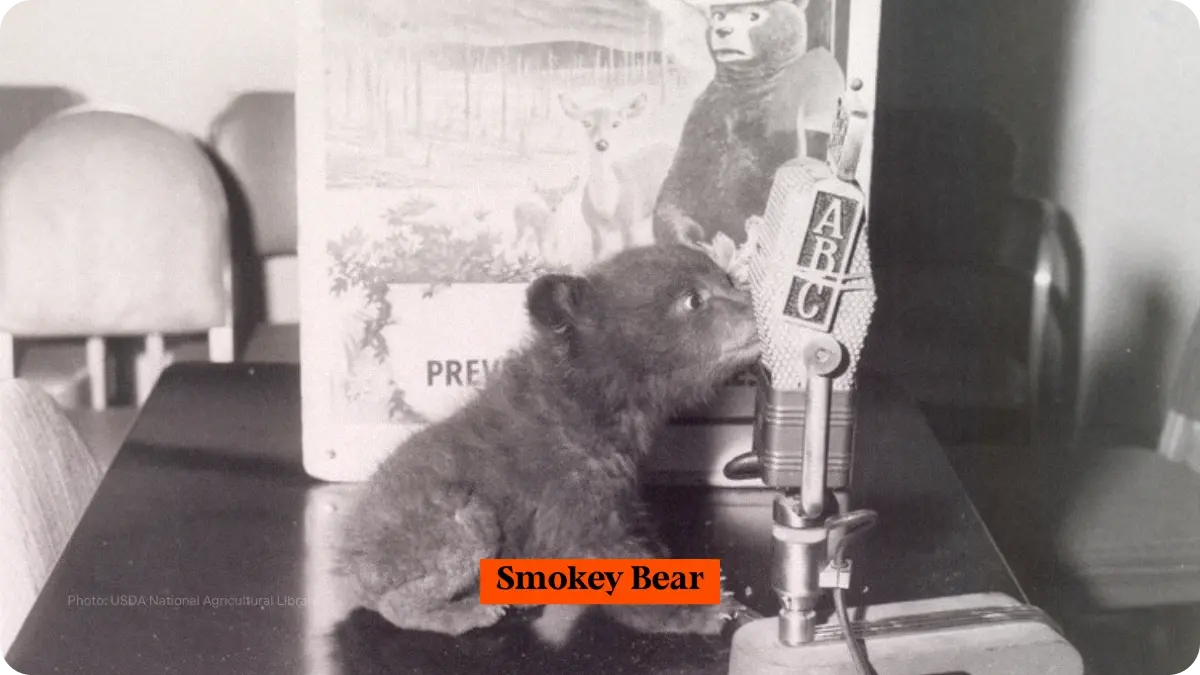
Smokey Bear was around before the famous bear in the ranger hat. The character first appeared in a wildfire-prevention campaign back in 1944. Six years later, firefighters in New Mexico found a badly burned black bear cub clinging to a tree. That little cub soon got the name Smokey Bear and a new job: he became the living Smokey Bear.

In May 1950, a wildfire hit the Capitan Mountains in New Mexico, and while crews were fighting the fire, they found a 3-month-old cub, who had taken shelter in a tree. He survived, but his paws and hind legs were badly burned.
The cub was taken to Santa Fe for veterinary treatment and then taken in by a game warden named Ray Bell and his family while he healed. They called him Hotfoot Teddy. Soon, his story started attracting national attention. The Smokey Bear campaign was already well known, so naming the little cub after the iconic character was a perfect fit. The US Forest Service was offered custody of him on the condition that he would help promote wildfire prevention and wildlife conservation.

In June 1950, Smokey flew to Washington, D.C., to start his new career. He moved into the National Zoo and quickly became one of its most popular residents.
People came to Washington to see the real bear behind Smokey Bear, and those who couldn't visit sent him letters. Smokey was reportedly getting more than 13,000 pieces of mail a week. There was so much mail that the US Postal Service even gave him his own ZIP code: 20252.
Life at the zoo was way calmer than you might think. Smithsonian records say Smokey was more of an introvert, and sometimes he didn’t feel like putting on a show for the visitors.
In 1962, a female black bear named Goldie joined him at the zoo, and they hoped to have cubs, but that didn’t happen. Instead, in 1971, another orphaned black bear from New Mexico arrived and was called Little Smokey. Now someone could carry on the family legacy.

After 25 years as the face of the campaign, Smokey finally retired in May 1975. Little Smokey took over as Smokey Bear II. The original Smokey stayed at the National Zoo until he passed away on November 9, 1976. They brought his remains back to New Mexico and buried him at Smokey Bear Historical Park in Capitan, not far from where he was found as a little cub 26 years earlier.
By that time, millions of people had come to see him, and his face had been featured on all kinds of wildfire-prevention material over the years. But what’s surprising is that the iconic hat, baggy jeans, and shovel weren't really his. Illustrator Rudolph Wendelin actually created those for the cartoon character.
Smokey was just a black bear from New Mexico who survived a wildfire and unexpectedly got a job playing a bear that already existed.
Share this story
Animals who worked in PR
More stories
Furrend circle
Be the first one to hear about updates
