Who is Tigrino?
Tigrino is a male wild cat living at Senda Verde Animal Refuge in Bolivia. Research involving Tigrino helped scientists identify a previously unrecognized species of tiger cat, Leopardus tilcayo.

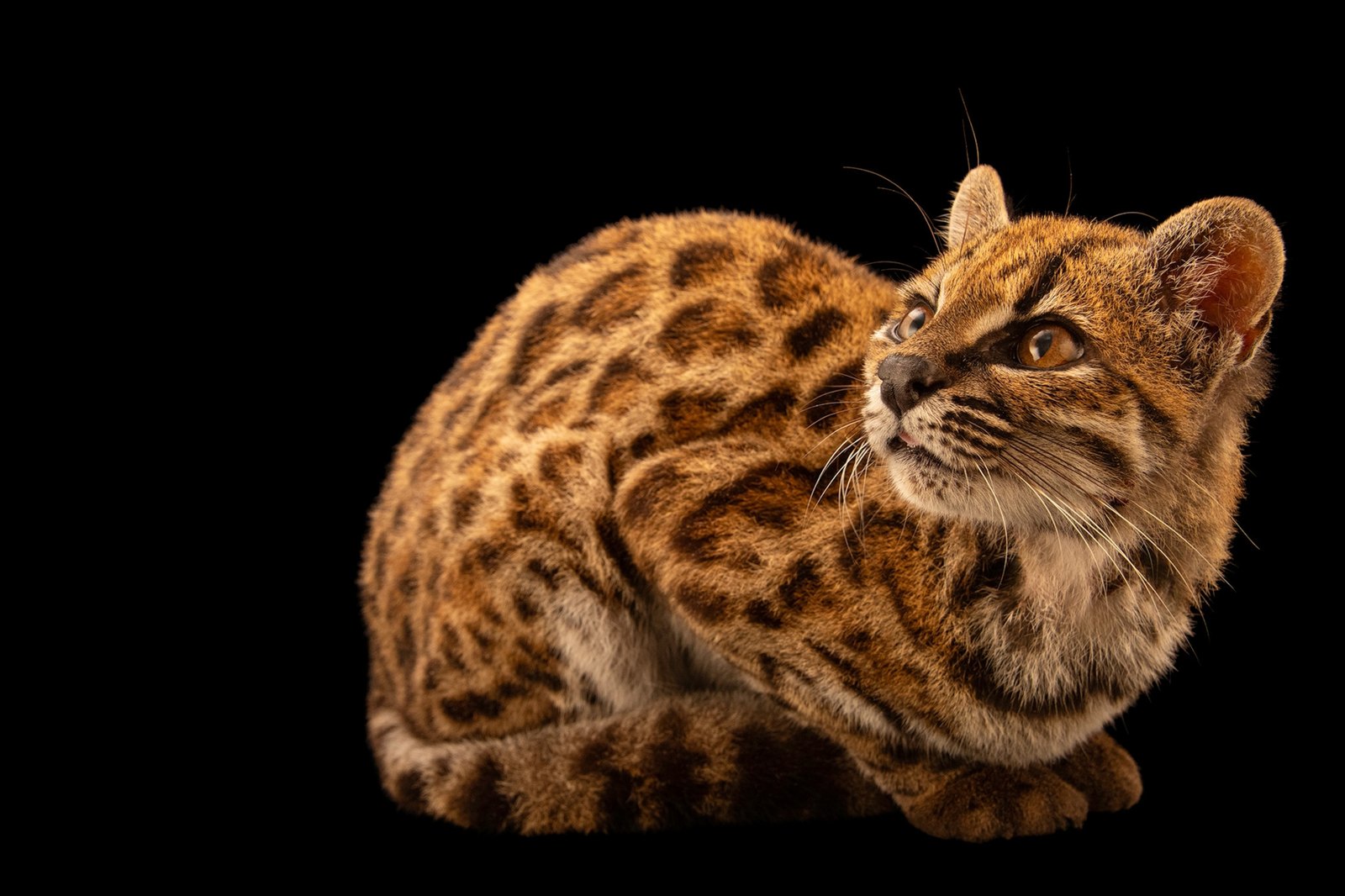
Photo · Joel Sartore / National Geographic Photo Ark
Tiger cat · Bolivia
Tigrino is a tiny wild cat from Bolivia who spent the first year of his life mistaken for an unusual house cat. Then he arrived at a wildlife sanctuary, where a biologist took one look at him and wondered what exactly he was.
It took nearly a decade to get the answer. In 2026, researchers identified Tigrino as a member of Leopardus tilcayo, a previously unrecognized species of tiger cat from Bolivia’s Yungas cloud forest, and the first new living cat species formally described by scientists in more than a century. Tigrino himself had been at the sanctuary the whole time. People in the Yungas had a name for these cats long before that.
A man finds a small spotted kitten on a road near a forest in Bolivia’s Nor Yungas. He takes him home, thinking he has found an unusual domestic cat. The household feeds him noodles, rice, and eggs. Well, he isn’t a house cat.
After about a year, it becomes clear that Tigrino is a wild animal and that a family home can’t keep him. He is brought to Senda Verde Animal Refuge in the Yungas for long-term care.
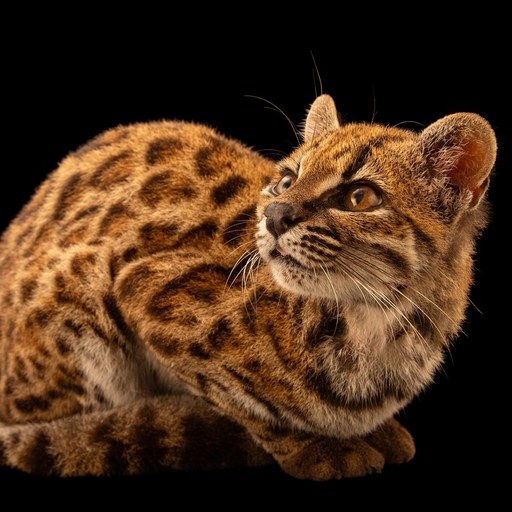
Bolivian biologist Paola Nogales-Ascarrunz gets a call from the sanctuary about what they describe as a “weird cat.” She goes to see him. Tigrino is tiny, with a small face, rounded ears, long whiskers and unusually large spots. Paola takes around a hundred photographs. At first, he’s assumed to be an unusual tiger cat.
While working on a guide to Bolivia’s wild cats, Paola returns to the photographs. She compares them with reference images of known tiger cats. Tigrino is smaller, his spots are larger, and his appearance doesn’t quite match. The question changes from What kind of tiger cat is this? to something much bigger.
Researchers begin investigating Tigrino genetically and comparing his DNA with other South American tiger cats. The project eventually brings together complete genomes from 38 cats, including living animals and specimens preserved in museum collections. The results show that the animals grouped together as tiger cats are actually five genetically distinct species. Tigrino belongs to one nobody in science had identified before.
Researchers formally describe Leopardus tilcayo in Current Biology. Genetic evidence suggests the tilcayo lineage separated from other tiger cats around 1.4 million years ago. Tigrino, the reference animal for the description, has been sitting at Senda Verde all along.
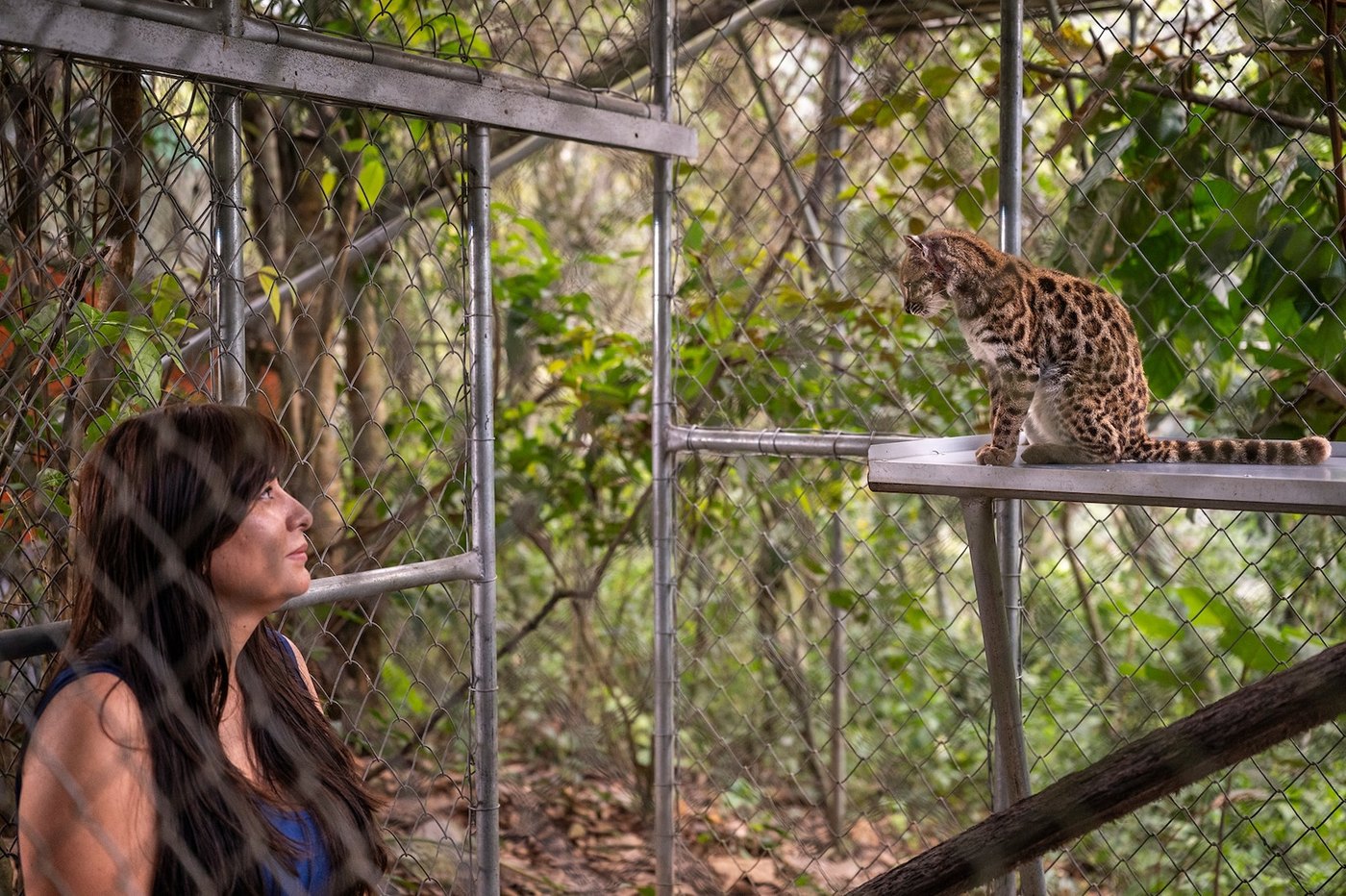
When Paola Nogales-Ascarrunz first met Tigrino, she didn’t know she was looking at an unnamed species. She mostly couldn’t believe how small he was.
Tigrino was already around a year old, but at roughly three pounds he looked more like a kitten than an adult wild cat. His face was small, his ears short and rounded, and large irregular spots covered his coat.
Paola photographed him extensively and moved on. A couple of years later, those photographs started bothering her. While preparing a guide to Bolivia’s wild cats in 2019, she compared Tigrino with reference images of the tiger cats he was supposed to resemble. They didn’t quite match.
Appearance alone wasn’t enough to declare a new cat species.
So the researchers went much deeper. They compared genetic material from Tigrino with tiger cats from across South America, including DNA from museum specimens and from a second animal that also turned up at Senda Verde. The analysis showed that what had long been treated as a simpler group of similar-looking cats contained several separate evolutionary lineages.
Tigrino’s was one of them. His lineage appears to have diverged from other tiger cats about 1.4 million years ago, enough genetic separation for researchers to recognize it as its own species. They named it Leopardus tilcayo. In the paper, Tigrino is the holotype: the individual the species description is tied to.
Scientists formally described the species in 2026. People living in the Bolivian Yungas already had a name for these cats.
The research team kept that name, recognizing that people in the region knew the animal long before science understood exactly what it was.
Tigrino is now about ten years old and still lives at Senda Verde Animal Refuge. He is the only known member of his species in long-term protective care.
He isn’t the only tilcayo researchers have encountered. Another animal later arrived at the sanctuary, and a female was once rescued after people mistook her for a pest, treated, and released. Wild tilcayos live in the Yungas. Exactly how many is another question.
At about three pounds and 18 inches from head to the base of his tail, Tigrino is smaller than the average domestic cat. His coat is light brown with large, irregular rosettes, and he has the rounded ears and small face that first caught Paola’s attention years ago.
Giving the tilcayo a scientific name doesn’t mean scientists suddenly know very much about it.
Researchers are still trying to establish where exactly the species lives, how large its population is, what it eats, how it reproduces, and what its everyday life in the wild looks like.
Even identifying one can be difficult. On camera traps, tilcayos can easily be confused with other small spotted cats such as oncillas and margays. Researchers are now placing more cameras throughout the Yungas to get a better picture of the species in the wild.
For a cat whose evolutionary history goes back more than a million years, introductions have only just begun.
Senda Verde posted video of him at the refuge.
On phones, open the post below to watch on X.
Tigrino is a male wild cat living at Senda Verde Animal Refuge in Bolivia. Research involving Tigrino helped scientists identify a previously unrecognized species of tiger cat, Leopardus tilcayo.
No. Tigrino was found around 2016 and has lived at Senda Verde since about 2017. What happened in September 2026 is that researchers formally described his species. Local communities in the Yungas already called these cats tilcayo.
Tigrino is an individual animal. His species, Leopardus tilcayo, was formally described as new to science in 2026. He is the holotype, the reference animal the description is based on.
Leopardus is usually said leh-PAR-dus. Tilcayo is the local name, and in Spanish it falls as til-KAH-yo. The research team kept that word rather than inventing a new one.
No. Wild tilcayos live in Bolivia’s Yungas, although scientists don’t yet know how many there are or their complete range. Other individuals have passed through Senda Verde, including a female who was treated and released. Tigrino is the one still living there in long-term care.
For about the first year of his life, yes. A local man found him as a kitten near a forest and initially believed he was a domestic cat. Once it became clear that he was a wild animal, Tigrino was taken to Senda Verde.
Tigrino weighs about three pounds and measures roughly 18 inches from his head to the base of his tail, smaller than the average domestic cat.
Tiger cats are small spotted wild cats in the genus Leopardus, found in Central and South America. Despite the name, they aren’t closely related to tigers. The new study argues that the group long treated as tiger cats is actually five species, including the tilcayo.
Tilcayo is the name traditionally used for the cat by local communities in Bolivia’s Yungas. When researchers asked why, people said it was simply what their grandparents called it. The scientific name keeps that word.
He was unusually small, with larger spots and a face that didn’t match the tiger cats expected in Bolivia. Genetic analysis later confirmed that his lineage was distinct.
The species was formally described on September 17, 2026, in Current Biology. Tigrino had been known to researchers for nearly a decade. Local communities had known these cats for generations.
Share this story
Meet more animals with stories worth getting to know.

Join the furrend circle