Was Katta-kun real?
Yes. Katta-kun was a real pink-backed pelican who lived at Tokiwa Park in Ube, Japan. His visits to Meiko Kindergarten were widely documented by Japanese television and local sources beginning in 1989.

Pelican · 1985–2008
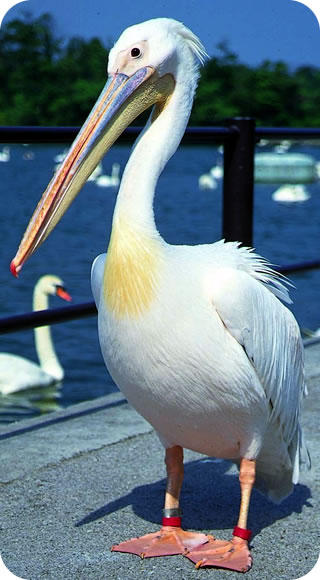
Katta-kun was a pink-backed pelican from Tokiwa Park in Ube, Japan, best known for an unusual habit he developed in 1989: flying about 800 meters to a nearby kindergarten to spend time with the children.
His school visits made him a celebrity across Japan. He appeared on television, received a national animal welfare award, inspired an animated film, and became one of Ube’s most recognizable local animals. Decades later, old footage of Katta-kun going to kindergarten found a new audience around the world.
Katta-kun was born at Tokiwa Park in Ube, becoming one of the first pink-backed pelicans in Japan to be successfully hatched through artificial incubation. He was hand-raised and became unusually comfortable around people. His name came from Calcutta, now Kolkata, where the pelicans brought to Tokiwa Park in 1967 had originated.
He started exploring Ube. As Katta-kun grew up, Tokiwa Park wasn’t quite enough. He began flying beyond the park to nearby neighborhoods, the coast, fields, and local schools.
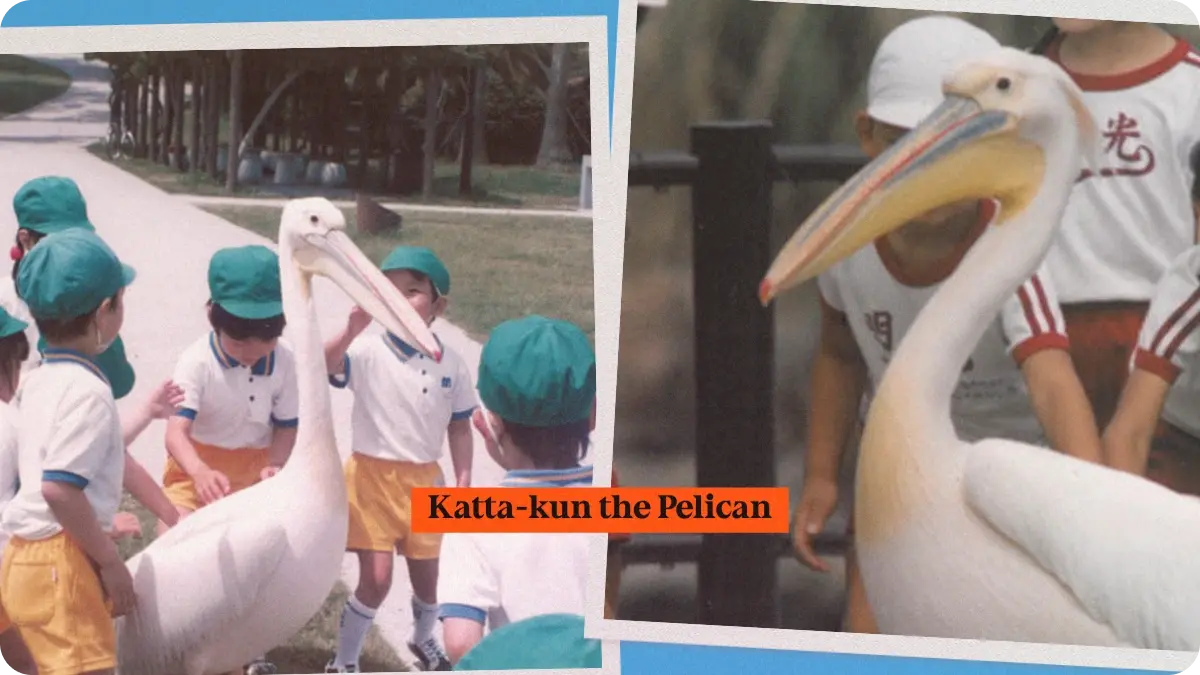
Katta-kun started going to kindergarten. At four years old, he began flying roughly 800 meters from Tokiwa Park to Meiko Kindergarten, and then he kept coming back. He spent time among the children, joined them while they danced to music, and became fascinated with his own reflection in a mirror, sometimes performing courtship displays for the pelican looking back at him.
A national celebrity. Footage of Katta-kun playing with the kindergarten children was broadcast on television, and the pelican from Ube became famous across Japan. That year, the Japan Animal Welfare Society honored him for bringing a cheerful story to people across the country.
He walked to school. When Meiko Kindergarten was being rebuilt, Katta-kun had a little trouble recognizing his usual destination from the air. Then he spotted a teacher and some of the children walking along the road. Katta-kun landed, and went to kindergarten with them on foot.
An accident. Katta-kun was injured in a traffic accident near the kindergarten, suffering an injury to his left leg. His visits became less frequent as the years went on.
Katta-kun got a movie. His story became an animated feature film. Katta-kun Monogatari was produced with money raised by people in Ube and screened around Japan, turning the city’s unusually sociable pelican into an animated character.
Back to kindergarten. After several years away, Katta-kun returned to Meiko Kindergarten and visited for several days. By then, generations of children in Ube had grown up knowing the pelican who sometimes came to school.
Katta-kun passed away at 23. He was found dead at Tokiwa Park eight days after his 23rd birthday. Flowers were left for him at the park, and children from Meiko Kindergarten were among those who came to say goodbye.
Ube remembers Katta-kun. 19 years after his death, Tokiwa Park held a special exhibition dedicated to him, displaying photographs and materials from his life and inviting people to share their memories.
Katta-kun goes around the world again. Nearly four decades after he first started going to kindergarten, old footage of his visits suddenly spread across TikTok, X, Reddit, Instagram and other social platforms. For much of the world, it was an introduction to a pelican Japan had known since 1989.
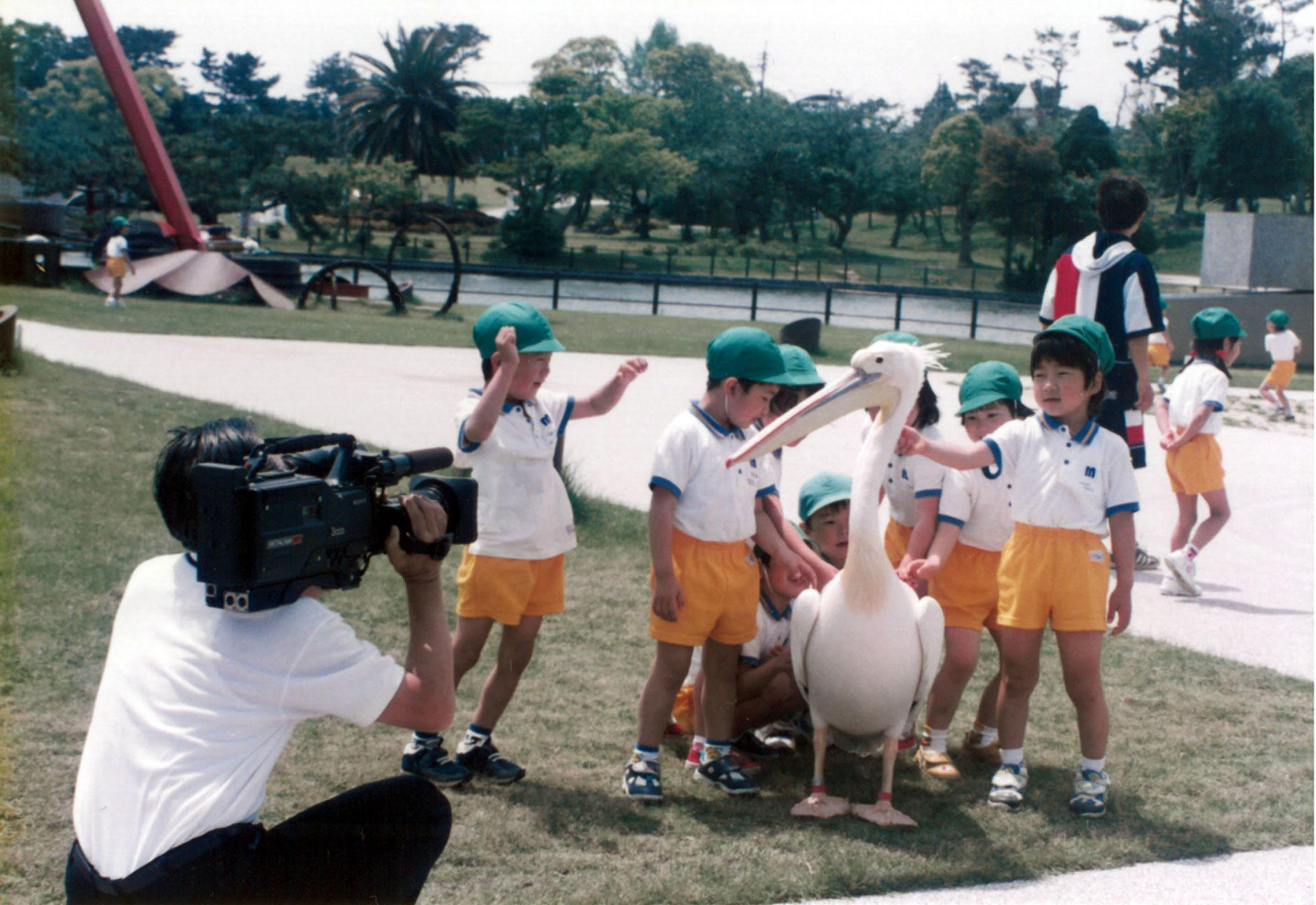
Photographs from Tokiwa Park show the pelican Japan already knew: at the park, among the children, and very much at home in Ube.
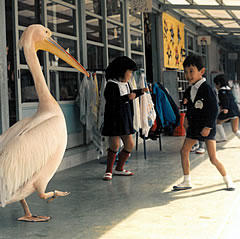
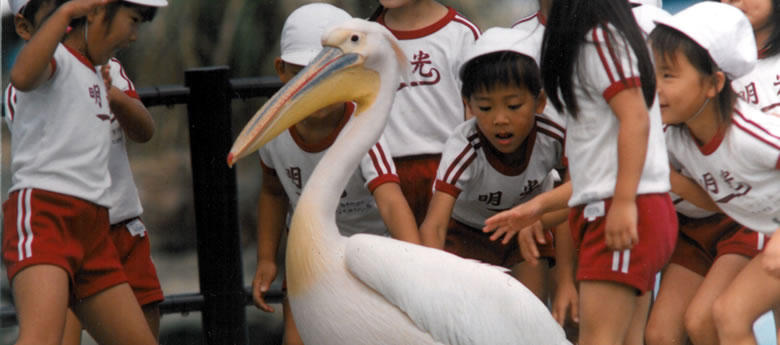
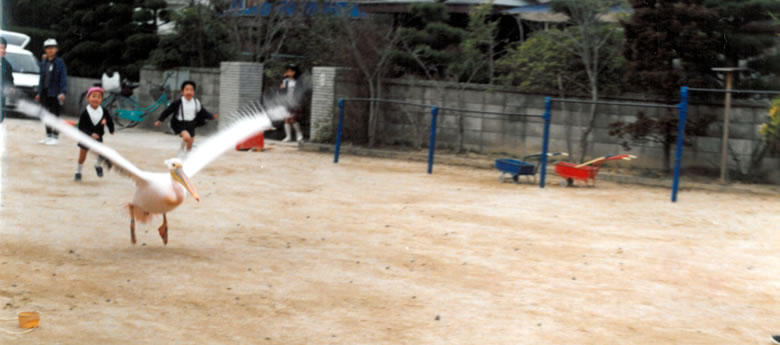
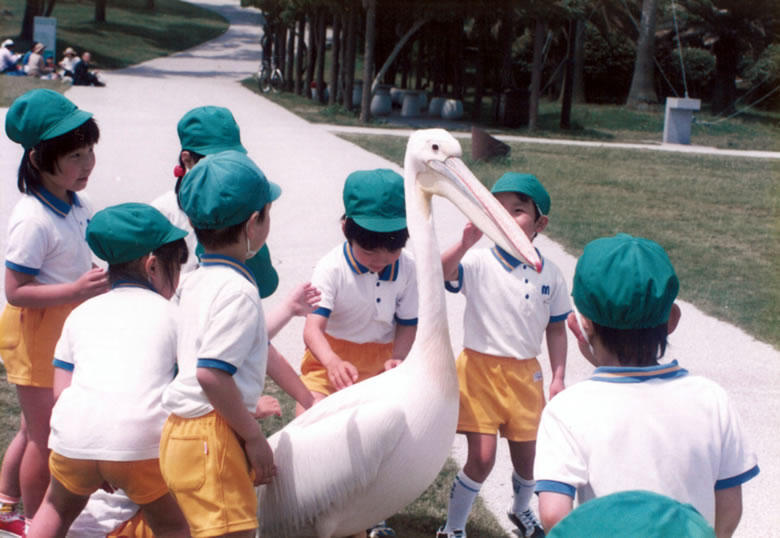
Photographs via Tokiwa Park / Tokiwa Zoo.
Katta-kun didn’t belong to Meiko Kindergarten. He lived at Tokiwa Park, about 800 meters away.
The human-raised pelican was already comfortable around people, and at the kindergarten he seemed particularly at ease with the children. He played among them, joined their activities, danced while music played, and occasionally became distracted by the pelican he saw in the mirror.
His visits became so familiar that Katta-kun wasn’t treated much like an unusual visitor anymore.
One story from Katta-kun’s kindergarten years deserves a little space of its own. In 1991, Meiko Kindergarten was undergoing reconstruction. The change apparently made it difficult for Katta-kun to identify the school from above. While flying nearby, he spotted a teacher and children walking toward the temporary kindergarten. So he came down and joined them. For once, the pelican who usually flew to kindergarten went to school the same way as everyone else.
Archival footage preserves what still surprises people decades later: a pelican casually spending the day with a kindergarten class.
Footage via the Film Archive of Japan.
Katta-kun’s school days became a national story long before social media existed. Television programs followed him, and in 1995 his life inspired the animated feature Katta-kun Monogatari. The film was created with money raised by Ube residents and screened around Japan.
Katta-kun had gone from a pelican who wandered out of a city park to one of Ube’s best-known residents.
Katta-kun’s relationship with Ube lasted much longer than his years at kindergarten. He became a local symbol, and his story remained part of the city’s memory after his death. Tokiwa Park continued telling his story, and a special exhibition marking the 10th anniversary of his death brought together photographs, film materials, and memories from people who had known him.
Some of the children who met Katta-kun eventually returned to Tokiwa Park as adults with children of their own.
In September 2026, Katta-kun unexpectedly went viral again.
Old footage showing him walking through Meiko Kindergarten began circulating across social media, reaching millions of people who had never heard of him. Some viewers even wondered whether a curious pelican hanging out with a kindergarten class could possibly have been real. Well, it was. The videos were new to much of the internet. Katta-kun’s story wasn’t. He had been doing this since 1989.
Yes. Katta-kun was a real pink-backed pelican who lived at Tokiwa Park in Ube, Japan. His visits to Meiko Kindergarten were widely documented by Japanese television and local sources beginning in 1989.
Yes. Katta-kun began flying from Tokiwa Park to nearby Meiko Kindergarten in 1989 and became known for spending time there with the children.
There doesn’t appear to have been a grand reason. Katta-kun was hand-raised and unusually comfortable around people. As he grew older, he began leaving Tokiwa Park and exploring the surrounding area, eventually discovering the nearby kindergarten and returning regularly.
Meiko Kindergarten was about 800 meters from Tokiwa Park.
At least once, yes. During reconstruction of the kindergarten in 1991, Katta-kun had trouble locating it from the air. After spotting a teacher and children walking nearby, he landed and accompanied them on foot.
No. Katta-kun was born through artificial incubation at Tokiwa Park in 1985 and was raised by people.
Yes. The animated film Katta-kun Monogatari was made with funds raised by Ube residents and released in the 1990s.
Katta-kun died at Tokiwa Park on July 16, 2008, shortly after turning 23. His death was mourned throughout Ube, and Tokiwa Park later held events and exhibitions remembering his life.
In September 2026, archival footage of Katta-kun visiting the kindergarten began spreading widely across social media, introducing his story to a large international audience nearly four decades after the original events.
Share this story
More animals with stories worth getting to know.

Join the furrend circle