
People and Their Animals Film & TV
Actor · Beverly Hills, 1958
Audrey Hepburn and Pippin
Audrey Hepburn needed a fawn to follow her around on set. So she took one home and became its mother for two and a half months.
In 1958, Audrey Hepburn was preparing to film Green Mansions, directed by her then-husband Mel Ferrer. Her character, Rima, lived in the Venezuelan jungle and had such a close relationship with animals that a young deer followed her everywhere. Getting a fawn to actually do that was another matter. The solution was to give Hepburn a four-week-old deer to raise at home. The plan was for the animal to bond with her before filming began. And it worked perhaps a little too well.
- Person
- Audrey Hepburn
- Animal
- Pippin (Ip), a fawn
- Place
- Beverly Hills, and the Green Mansions set
- Years together
- 1958 – 1959
- Known for
- Bottle-feeding a deer at home so she would follow Hepburn on camera, and through the supermarket
She came home with Audrey
Hepburn named the fawn Ip, after the little “ip ip” noises she made when she was hungry. Pippin was the longer name; Ip is what stuck in everyday life.
For the next two and a half months, Ip lived with Hepburn and Ferrer. Hepburn bottle-fed her every two hours, and the young deer became so attached that Ferrer later said she seemed to think Hepburn was her mother.
By the time filming began, there wasn’t much acting required when Ip followed her around. Even the professional animal trainers were impressed.
Ip went pretty much everywhere
Their arrangement didn’t stop when Hepburn left the house. Ip followed her around Beverly Hills, went shopping with her and joined her on trips to the supermarket. Photographer Bob Willoughby, who documented Hepburn extensively during this period, photographed the pair together at home, around town and on set.
In one of his photographs, Hepburn is asleep on a sofa with Ip curled up beside her. Hepburn’s Yorkshire terrier, Famous, is sleeping at the other end.
Beverly Hills noticed the deer
Willoughby also photographed Hepburn walking through a supermarket with Ip behind her. Seeing Audrey Hepburn shopping in Beverly Hills wasn’t necessarily unusual by then. Seeing her followed through the aisles by a young deer was.
Willoughby later remembered that the pair stopped people in their tracks, although shoppers surprisingly left them alone. Ip just followed Hepburn through the store as she had been trained to do everywhere else.
Then they went to work
When filming started, the whole strange arrangement paid off. Ip followed Hepburn naturally on the Green Mansions set, giving Rima and her animal companion the relationship the film needed. The two had already spent months eating, sleeping, shopping and going about everyday life together.
The film itself wasn’t a success when it arrived in theaters in 1959. Its smallest co-star may have left a more lasting impression.
For a while, the movie followed them home
Ip wasn’t really Hepburn’s conventional pet. Their time together began with a practical assignment: raise this deer so she trusts you enough to follow you in a movie. But for two and a half months, the distinction became fairly meaningless.
Hepburn fed her throughout the day. Ip slept beside her, followed her around the house, and came along when she went shopping. By the time cameras were rolling, the relationship audiences were supposed to believe had already happened offscreen.
Sometimes the easiest way to get an animal to act like she loves you is apparently to let her move in.
Willoughby’s pictures
Bob Willoughby followed Hepburn at home, around Beverly Hills, and on set, including the supermarket run that still stops people cold.
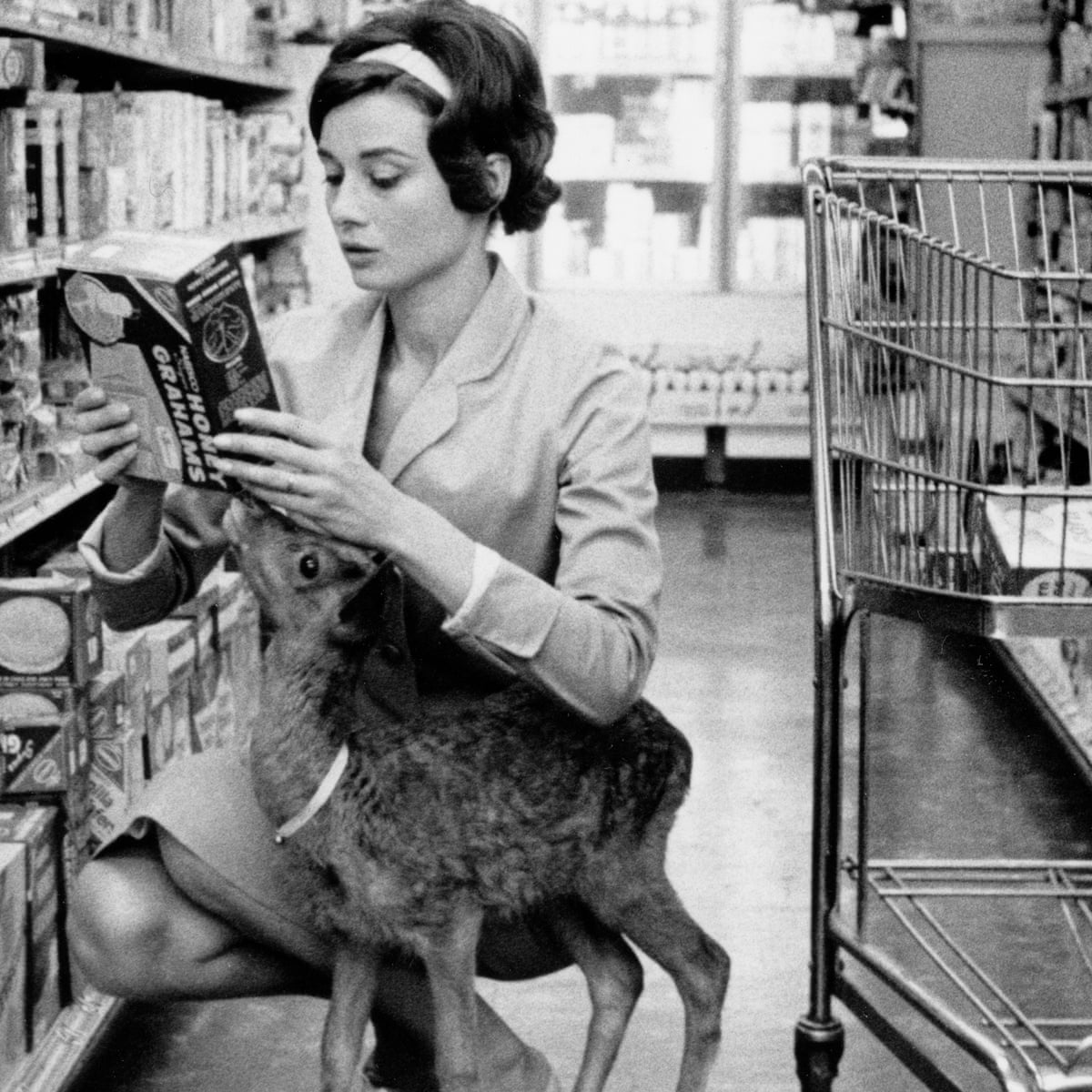
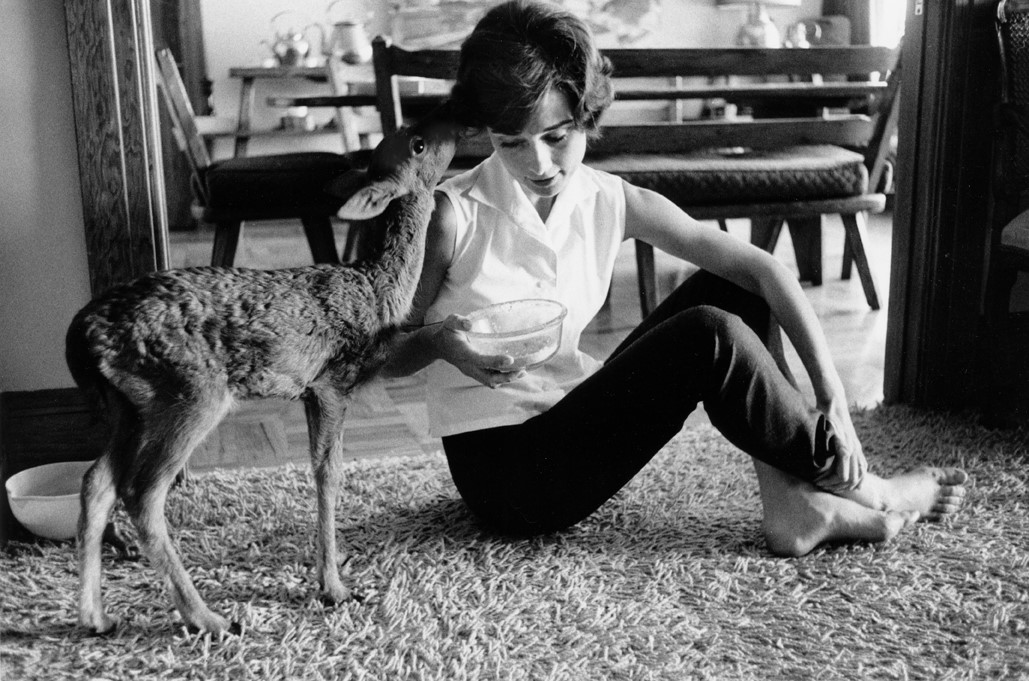
Photographs by Bob Willoughby. Left via The Guardian; right via AnOther. More of the pair appears in Austin Film Society’s photo set and the ongoing Christie’s Audrey Hepburn collection.
Share this story
