

August 23, 2026
Sinbad, the Coast Guard's Chief Dog
For 11 years, Sinbad served aboard the Coast Guard cutter Campbell, surviving the Second World War and getting into a remarkable amount of trouble on shore.
Sinbad was smuggled aboard a Coast Guard cutter in 1937. 11 years later, he retired with his own service number, five war ribbons, four battle stars, and the rank of Chief Dog. Somewhere in between, he also managed to get himself banned from Greenland.

Sinbad was aboard the Coast Guard Cutter Campbell back in 1937 when someone snuck him aboard in a sailor's bag. The captain was surprised to find him during roll call the next day, but the crew convinced him to let the little mixed terrier stick around. Sinbad quickly went from being a stowaway to a full-fledged crew member. He joined in for roll call, learned his way around the cutter, and even figured out how to climb the ladders between decks all by himself.
Eventually, the Coast Guard made his status official. They gave him the service number 069-069, along with his own health records. He even made an appearance on a Christmas dinner program back in 1940.
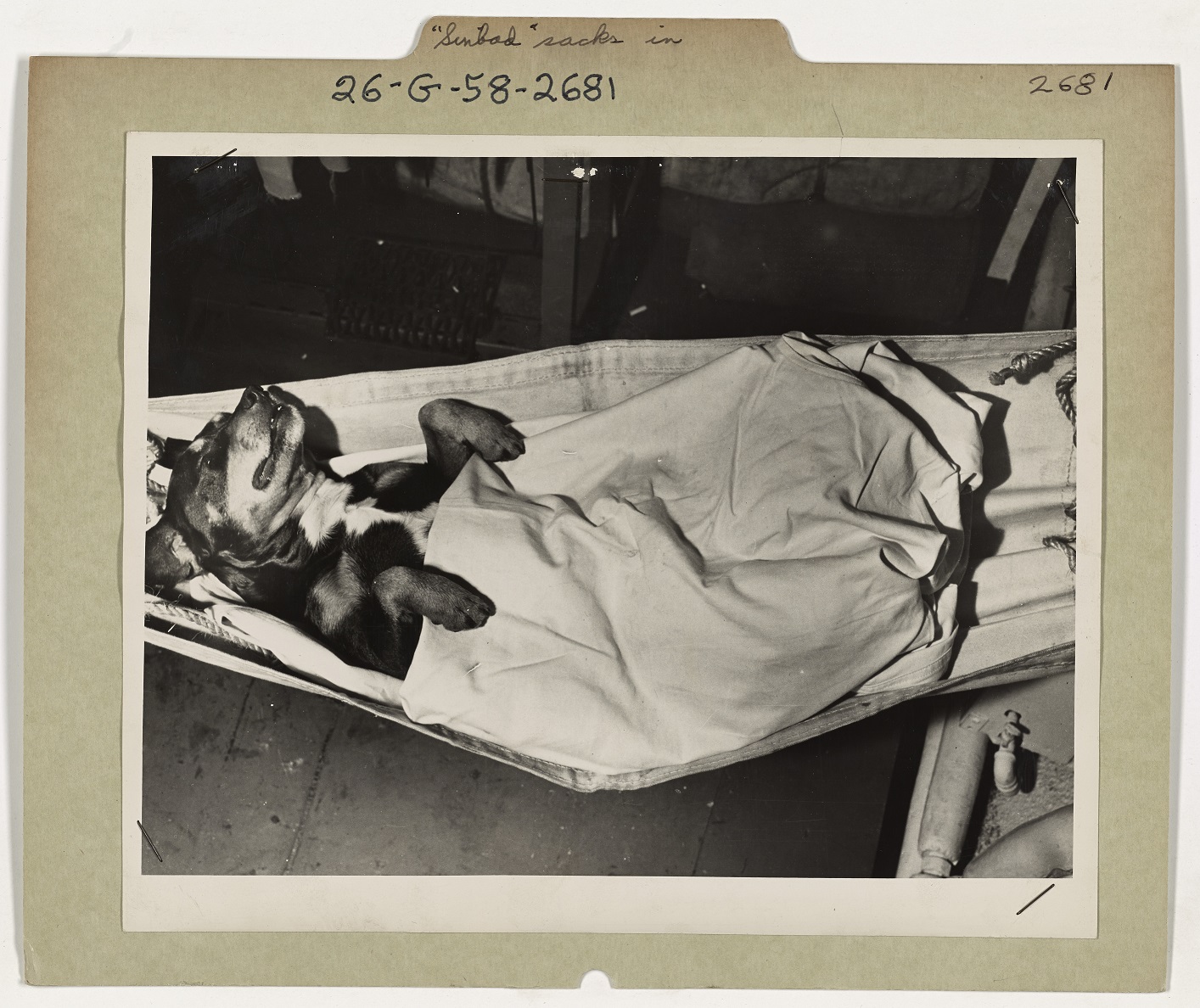
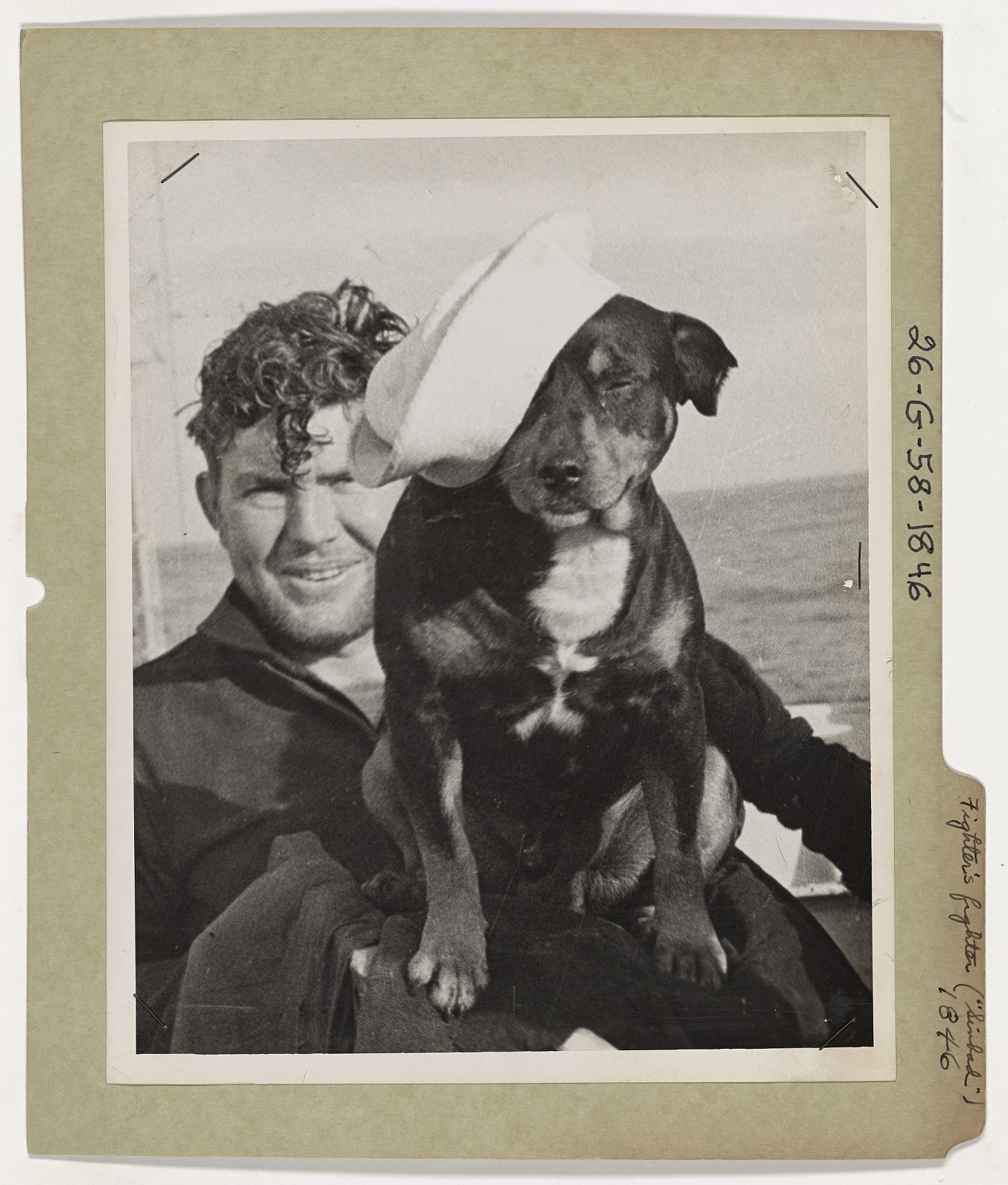
The sailors made him a hammock since life on a cutter in the North Atlantic wasn’t exactly comfortable. His little hammock moved with the ship better than a regular bunk, and there are cute photos of him snoozing while his shipmates gather around him. They also made him a uniform, but Sinbad clearly had other ideas. After one inspection, he went below deck and tore it off, refusing to wear it again.
At sea, Sinbad knew the routine, but things got a bit wild when they docked. During a stop in Greenland in 1940, he decided that chasing sheep was a fun way to spend shore leave, which didn’t sit well with the local farmers. Next thing you know, he was banned from Greenland for good.
It wasn't his only disciplinary problem. Sometimes he’d wander off in port, miss the ship, and get familiar with the local bars where he learned how to jump up on a stool and bark for a beer, and his shipmates always picked up the tab.
There was that one time when he missed the boat leaving Iceland. Realizing what was happening, he jumped into the freezing water to catch up, and the captain had to turn around and rescue him. Following rules wasn’t really his thing, but he was a good shipmate.
When the U.S. entered World War II, Campbell started escorting convoys in the North Atlantic, where German U-boats were hunting the ships carrying supplies and personnel between North America and Britain.
On February 22, 1943, during a tense battle with German submarines protecting Convoy ON-166, the Campbell went toe-to-toe with U-606. They fired and even rammed it, but that collision busted Campbell's hull and flooded the engine room. Meanwhile, Sinbad snoozed right through the chaos.
After that, things got dicey. Campbell lost power and started taking on water, so most of the crew had to transfer to another ship while a few stayed to keep the damaged cutter afloat. Sinbad was loyal and stuck with them.
The crippled Campbell survived and was towed hundreds of miles to safety. Sinbad continued serving aboard her for the rest of the war, earning five campaign ribbons and four battle stars for his service. He got promoted to Chief Dog after the battle, but true to form, he missed the promotion ceremony and got demoted back to Dog First Class at the next roll call.
By the end of the war, Sinbad was already famous. A biography, “Sinbad of the Coast Guard," was written about him, and in 1946 he went on a national tour that kicked off with a ticker-tape parade in New York. He showed up at theaters, parades, and even starred in a short film called “Dog of the Seven Seas.” But in his heart, Campbell was still home.
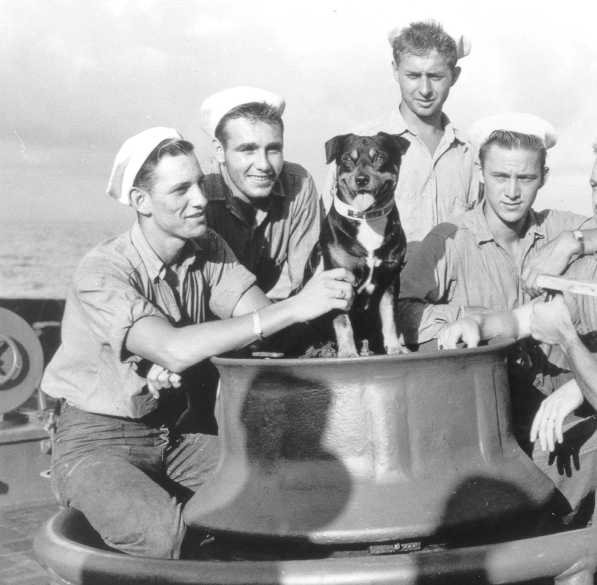
On September 21, 1948, after 11 years of service, Sinbad finally retired and moved to the Coast Guard station at Barnegat Light, New Jersey. He spent his later years there, and even in retirement, he kept up his old habits. Everyone in Barnegat knew him, and he still occasionally went out for a beer.
Sinbad passed away on December 30, 1951, and they buried him under the flagpole at the station. Later, they put a headstone over his grave.
With all his ranks, ribbons, and media fame, the simplest reason for Sinbad’s place in Coast Guard history is that the sailors aboard the Campbell thought of him as one of their own. He crossed oceans, lived on the same ship, and stayed with her when she nearly went down in the North Atlantic. And he just happened to spend part of the battle asleep. As editor of the old Coast Guard magazine, Eddie Lloyd put it, "Perhaps that’s why Coast Guardsmen love Sinbad. He’s as bad as the worst and as good as the best of us."
Share this story
Animals with jobs
More stories
Furrend circle
Be the first one to hear about updates
