
People and Their Animals History
Nurse · Athens to Crimea
Florence Nightingale and Athena
Florence Nightingale found a little owl being tormented by children in Athens. She rescued her, named her Athena, and brought her along for the rest of the trip.
In 1850, four years before Florence Nightingale left for the Crimean War, she was traveling through Greece and Egypt with family friends. While walking beneath the Acropolis in Athens, she spotted a little ball of fluff surrounded by a group of children. It was a young owl. Nightingale intervened, took the bird with her, and named her Athena.
- Person
- Florence Nightingale
- Animal
- Athena, a Little Owl (Athene noctua)
- Found
- Athens, beneath the Acropolis · 1850
- Years together
- About four years, until 1854
- Known for
- Traveling in Nightingale’s pocket and surviving as a museum specimen in London
Athena joined the trip
Nightingale wasn’t heading home yet. When she left Athens, Athena came too, traveling with her through Corfu toward Trieste. And the owl wasn’t the only animal in the group: Nightingale also traveled with two tortoises, Mr. and Mrs. Hill, and a cicada named Plato.
Athena wasn’t delighted with her new circumstances at first. But Nightingale gradually won her over. Her sister later wrote that the little owl would fall asleep in Florence’s lap and take food directly from her hand.
Plato was less fortunate because Athena ate him.
She became a pocket-sized companion
Athena was a Little Owl, a species that rarely gets larger than about 20 centimeters tall.
Back in England, she became Nightingale’s constant companion, sometimes sitting on her shoulder and sometimes traveling around tucked into a pocket.
She wasn’t necessarily as fond of everyone else. Accounts of Athena describe a bird with a temper who would peck at people she didn’t like. With Nightingale, though, she was very attached. The two were together for about four years.
Athena died just before Florence left for Crimea
In 1854, Nightingale was preparing for the journey that would make her famous. Then Athena passed away. Nightingale was devastated. She had the little owl preserved, and Athena remained with the family.
Within days, Nightingale left England for the military hospitals of the Crimean War.
“Poor little beastie, it was odd how much I loved you,” she said.
Her sister wrote Athena’s story
The following year, Nightingale became seriously ill while working in Crimea.
Back home, her older sister Parthenope decided to send her something to cheer her up. She wrote and illustrated a little book called Life and Death of Athena, an Owlet from the Parthenon.
It told Athena’s whole story: the tiny owl under the Acropolis, the journey through Europe, her life with Florence and eventually her death.
More than 170 years later, the original book survives in the collection of Trinity College, Cambridge. And so does Athena.
You can still meet her
Athena is now part of the collection at the Florence Nightingale Museum in London. Among Nightingale’s lamps, clothes, letters and other objects from one of the most famous lives of the Victorian era sits a very small stuffed owl. It’s an unusual thing to survive from Florence Nightingale’s story. But then Athena had been travelling with her long before the lamp.
Athena in pictures
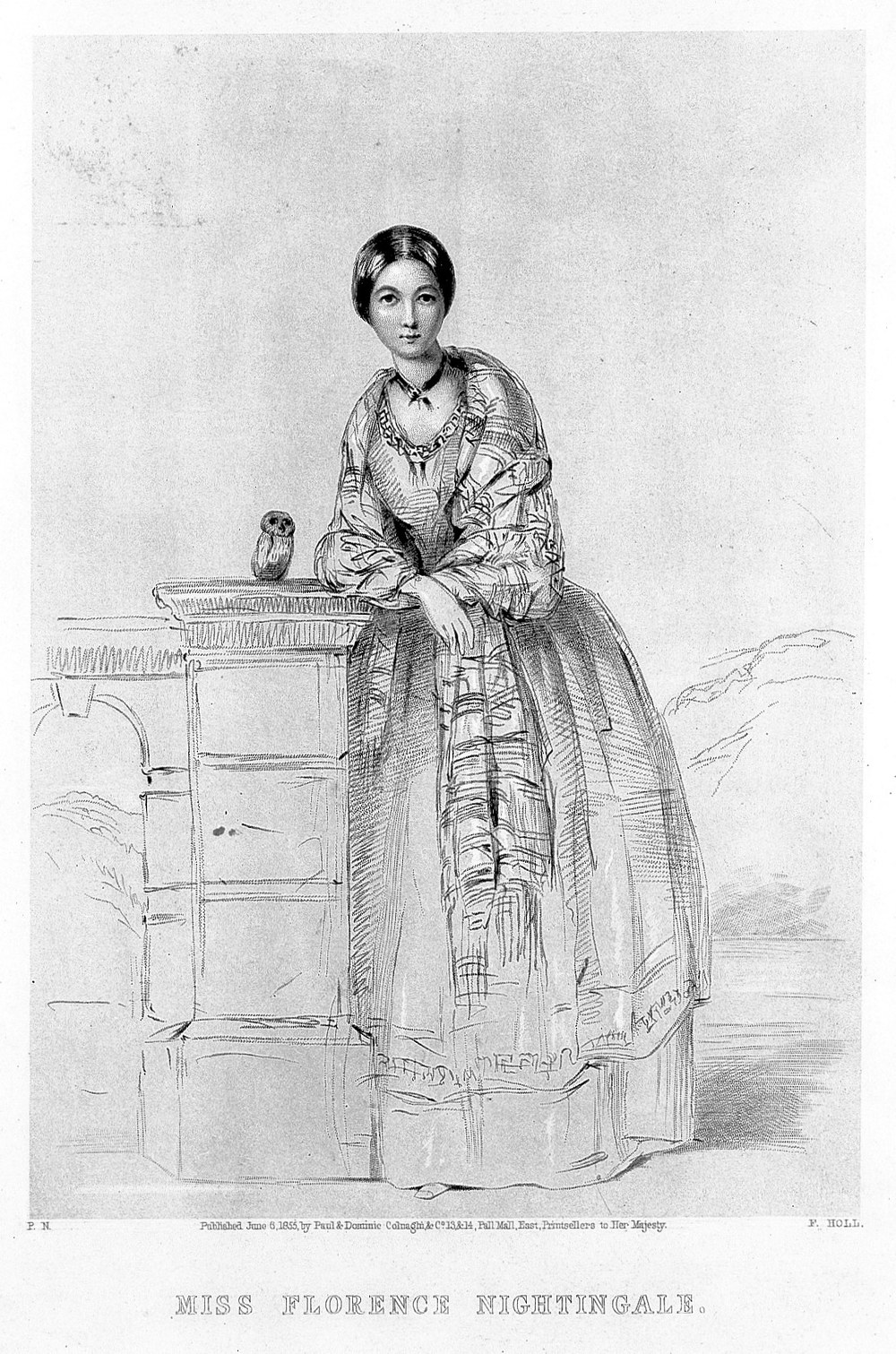
Parthenope drew Athena into Florence’s story. The museum still keeps the owl herself.

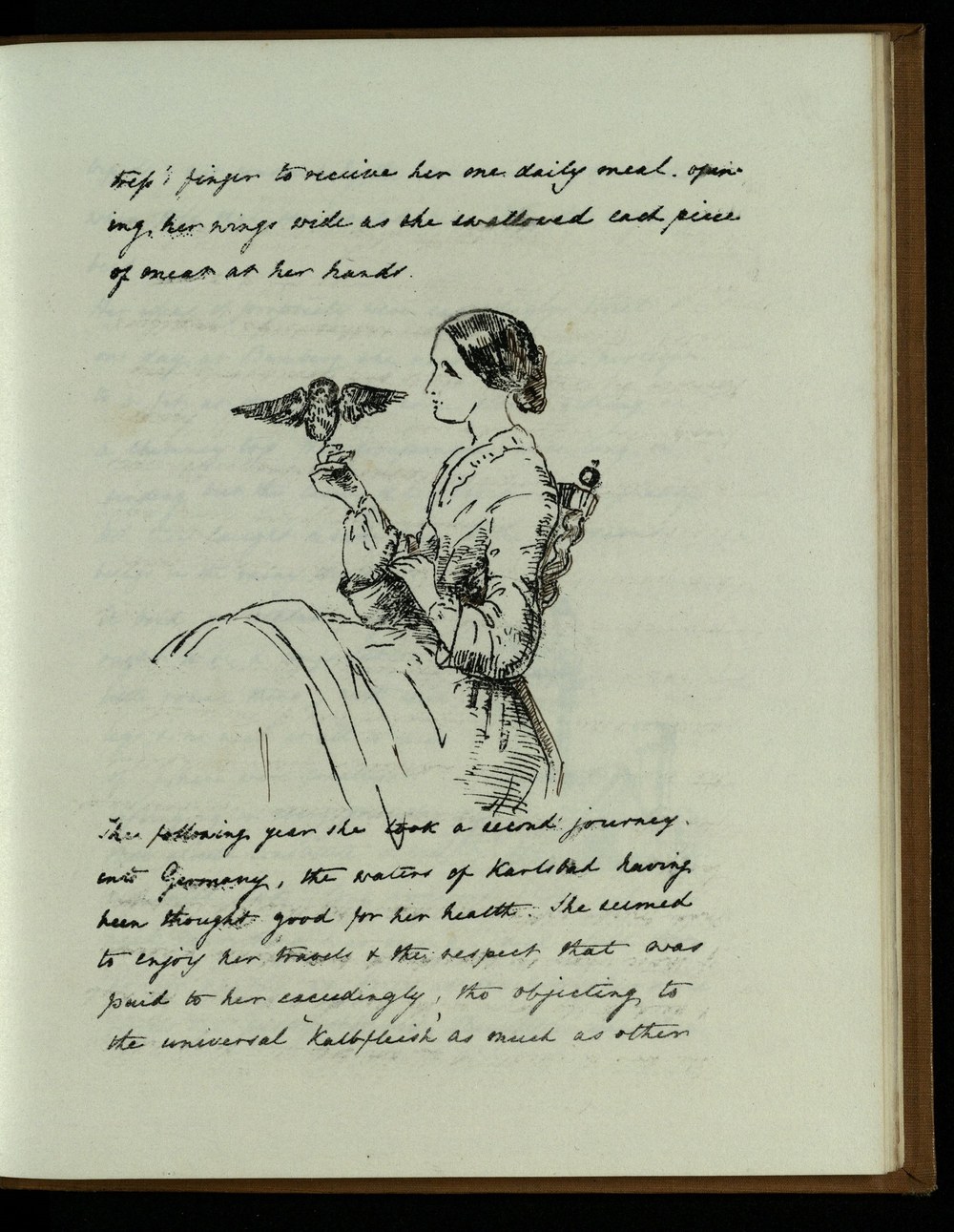
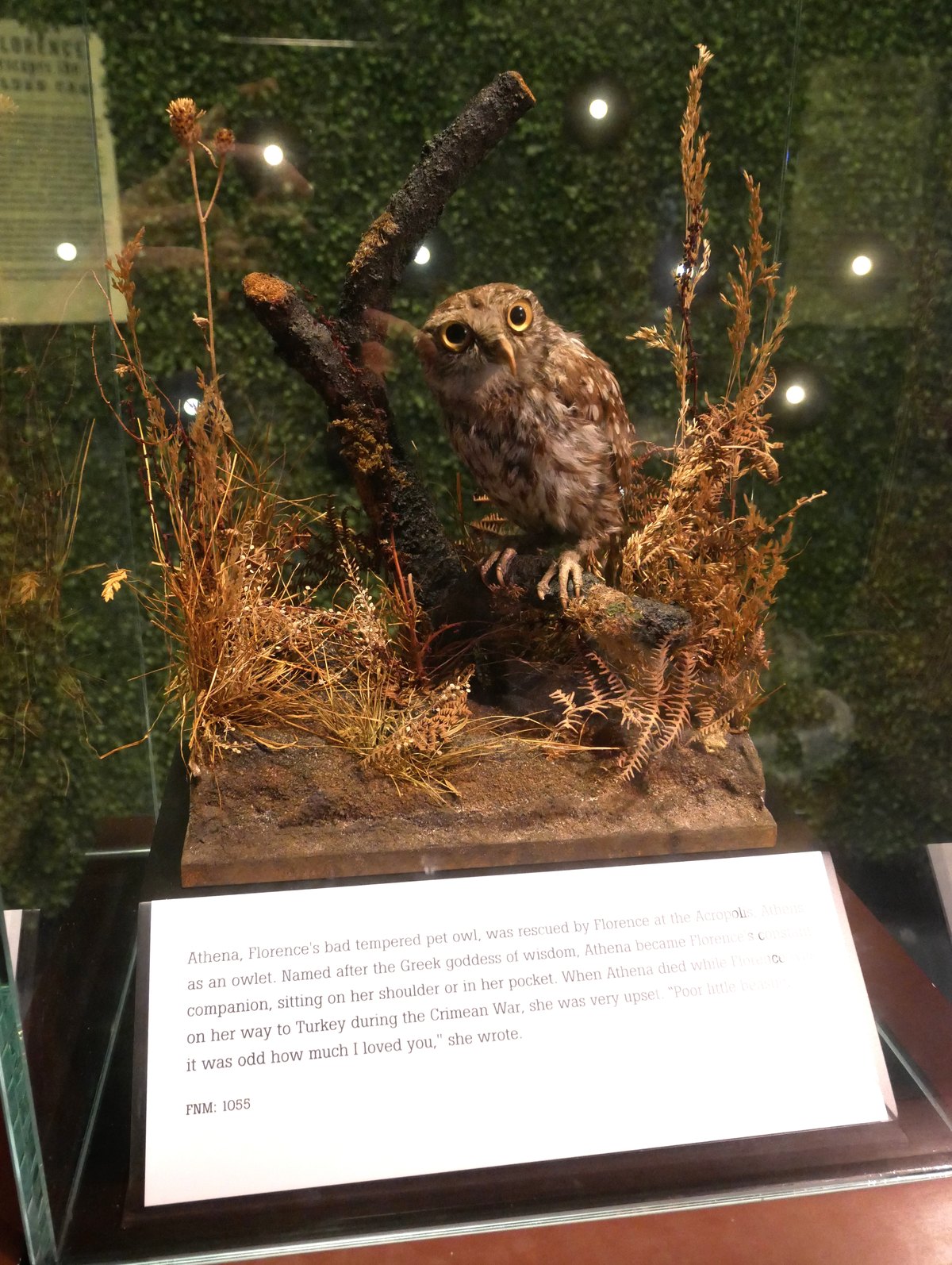
Left: Wellcome Collection / Wikimedia Commons (CC BY 4.0). Center: Drawing from Life and Death of Athena, via Trinity College Library; full book in the Wren Digital Library. Right: Photo of Athena at the museum via Wikimedia Commons (Doyle of London).
Share this story
