Was Lady Greyhound a real dog?
Yes. The original Lady Greyhound was a real white-and-gold Greyhound born in Clay Center, Kansas, on January 28, 1957.

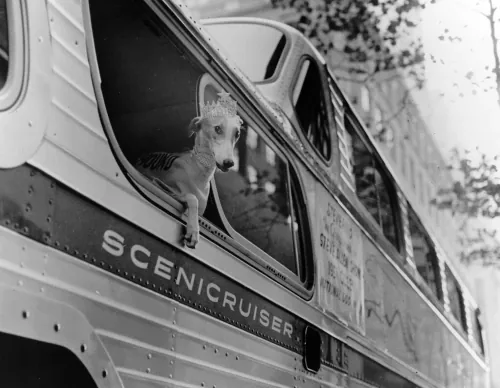
Spokesdog · 1957–1960s
Lady Greyhound was a white-and-gold Greyhound who became the living face of Greyhound Lines during the golden age of American bus travel. She appeared on television, opened new terminals, attended parades and charity events, modeled dog fashions, and traveled across the country as one of corporate America's most unusual public relations representatives.
Her career eventually became bigger than one dog. After the original Lady Greyhound retired, look-alike successors continued making appearances under her name, turning a real Greyhound from Kansas into a character that represented the company for more than a decade.
A future spokesdog was born. A white-and-gold Greyhound was born in Clay Center, Kansas. Bred by Roy Lee, she was the daughter of Little Shamrock and Happy Yet. She would soon have a considerably less ordinary career.
Steverino made her television debut. At only a few months old, the puppy appeared in a Greyhound commercial during The Steve Allen Show. She was nicknamed Steverino, after the show's host. The same year, the Dog Welfare Guild named her Queen of National Dog Week.
She became a canine celebrity. Steverino became a national publicity attraction. She appeared at parades, charity events, and civic campaigns, attracted fan clubs, and traveled around the country on behalf of Greyhound. She was reportedly insured by Lloyd's of London for $300,000. Opening a new Greyhound terminal could involve the usual ceremonial ribbon-cutting. When Steverino was involved, the ribbon was sometimes made of dog biscuits.
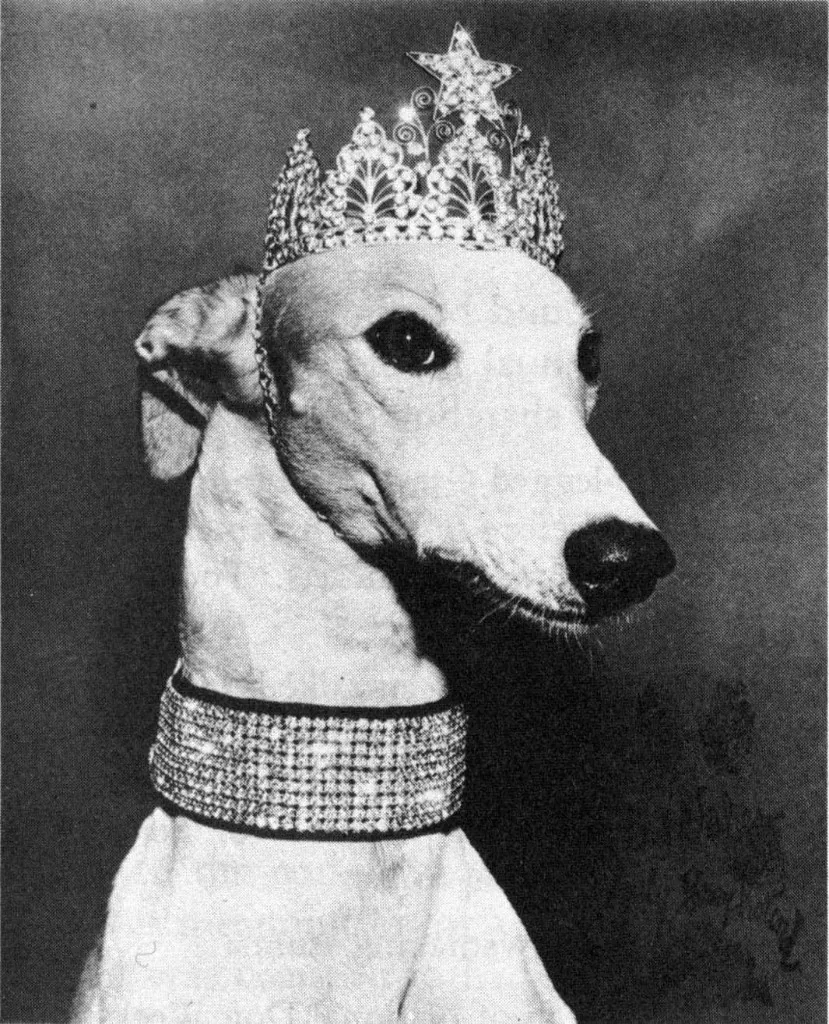
Lady Greyhound got her name. When Greyhound ended its sponsorship of The Steve Allen Show, Steverino needed a name of her own. She became Lady Greyhound, with the change announced during Greyhound commercials on The Jack Benny Program. The new name came with an appropriately glamorous public image, including a sparkling collar and tiara.
Lady became a mother. Lady Greyhound gave birth to puppies during her increasingly busy public career. Her family became part of the publicity story too, with photographs of Lady and her puppies appearing in the press.
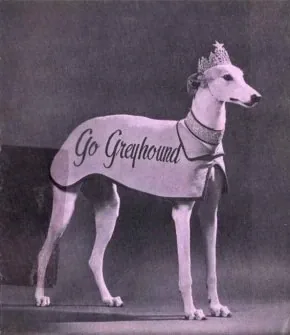
Public relations, canine edition. Lady Greyhound continued traveling around the country for television appearances, parades, hospital visits, charity events, and other public engagements. She received honors including the Bide-a-Wee Medal and was named Outstanding Dog of 1961. She also became chair of the pet division of the National Multiple Sclerosis Society and served as a symbol for World Animal Day. She traveled mainly by airplane and had her own wardrobe of coats and mufflers.
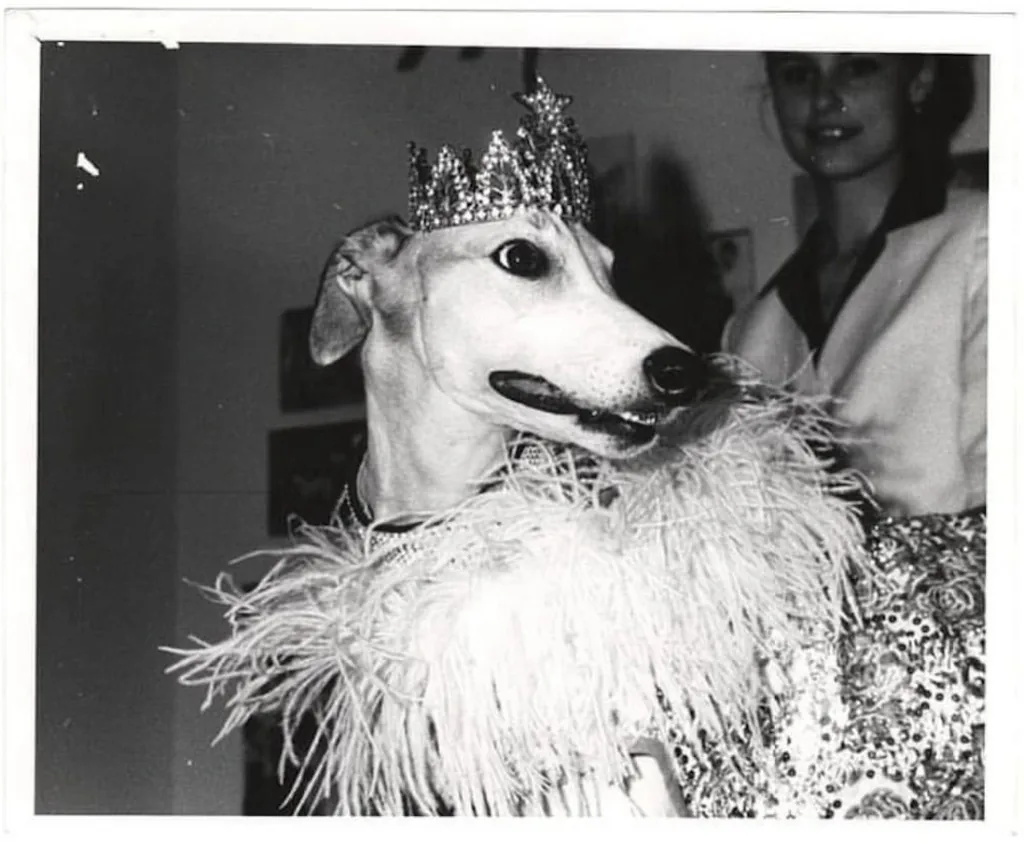
Lady Greyhound went to the World's Fair. At the New York World's Fair, Greyhound was everywhere, operating transportation around the fairgrounds and maintaining its own pavilion. So was Lady. She starred in a canine fashion show at the Greyhound exhibit, modeling clothes several times a day and greeting visitors with "pawtographs."
One Lady became several. Around this time, Greyhound retired the original Lady Greyhound. But Lady Greyhound had become too useful a public personality to retire with her. Two younger Greyhounds took over the role, with one based in Chicago and another in New York. They were deliberately scheduled so that two Lady Greyhounds never appeared in the same place on the same day. Lady Greyhound was no longer just one dog. She was a character.
A Hollywood appearance. A Lady Greyhound appeared at the premiere of Disney's The Ugly Dachshund, continuing the character's run of celebrity and promotional appearances.
The campaign ended. After roughly 13 years, Greyhound brought the Lady Greyhound campaign to an end. The original dog had retired years earlier, but her name and public persona had continued through her successors.
Publicity photographs from her career capture the carefully built image of a canine celebrity: tiara, jeweled collar, and all.
Photographs courtesy of the Weegee Archive / International Center of Photography.
There wasn't always more than one Lady Greyhound.
The original was the Kansas-born dog first known as Steverino. She became a television personality, traveled around the country, collected honors, posed for publicity photographs, and helped establish Lady Greyhound as more than a corporate logo.
By the mid-1960s, Greyhound had a problem familiar to anyone managing a successful celebrity: demand for Lady exceeded the number of Ladies available.
And then the original retired, and two younger Greyhounds began portraying her from different parts of the country. For the public, Lady Greyhound continued.
Lady Greyhound's job wasn't symbolic in the same way as most animal mascots. She had an appearance schedule. Over the course of her career, Lady attended charity events, visited hospitals, appeared in parades, posed with celebrities and models, went on television and radio, promoted safety campaigns, opened Greyhound terminals, and represented the company at public events around the country.
At the 1964–65 New York World's Fair, the schedule became particularly serious. Lady's canine fashion show ran repeatedly throughout the day at Greyhound's exhibit.
She had a handler, transportation, a wardrobe, and plenty of publicity obligations. In other words, Lady Greyhound really did work in PR.
Greyhound had a major presence at the 1964–65 New York World's Fair, including hundreds of vehicles carrying visitors around the grounds. Its four-legged representative had her own assignment.
At the Greyhound exhibit, Lady Greyhound modeled canine fashions in a small theater several times a day. Official schedules show performances running from the afternoon into the evening on multiple days of the week. She also appeared in parades and posed for photographs with visitors.
For a dog whose career began in a television commercial seven years earlier, the World's Fair was a remarkably appropriate stage.
Yes. The original Lady Greyhound was a real white-and-gold Greyhound born in Clay Center, Kansas, on January 28, 1957.
Steverino was the name used early in her career, inspired by Steve Allen. She was renamed Lady Greyhound in 1959 after Greyhound stopped sponsoring The Steve Allen Show.
In effect, yes. She served as Greyhound's live mascot and goodwill ambassador, making promotional, charity, television, and civic appearances on behalf of the company.
Her tiara and decorated collar were part of the elegant public persona created around Lady Greyhound. Greyhound was presenting her as a canine celebrity rather than simply using a dog as a logo.
Despite representing a bus company, Lady reportedly traveled primarily by airplane because her appearance schedule took her around the country.
Eventually, yes. The original Lady Greyhound was retired around the mid-1960s and replaced by two younger Greyhounds based in different cities. They continued appearing publicly under the Lady Greyhound identity.
The date of the original Lady Greyhound's death does not appear to be reliably documented in the surviving sources. Her individual career ended around the mid-1960s, while successor dogs continued the Lady Greyhound campaign until 1970.
Share this story
More animal personalities, remarkable lives, and stories worth remembering.

Join the furrend circle