
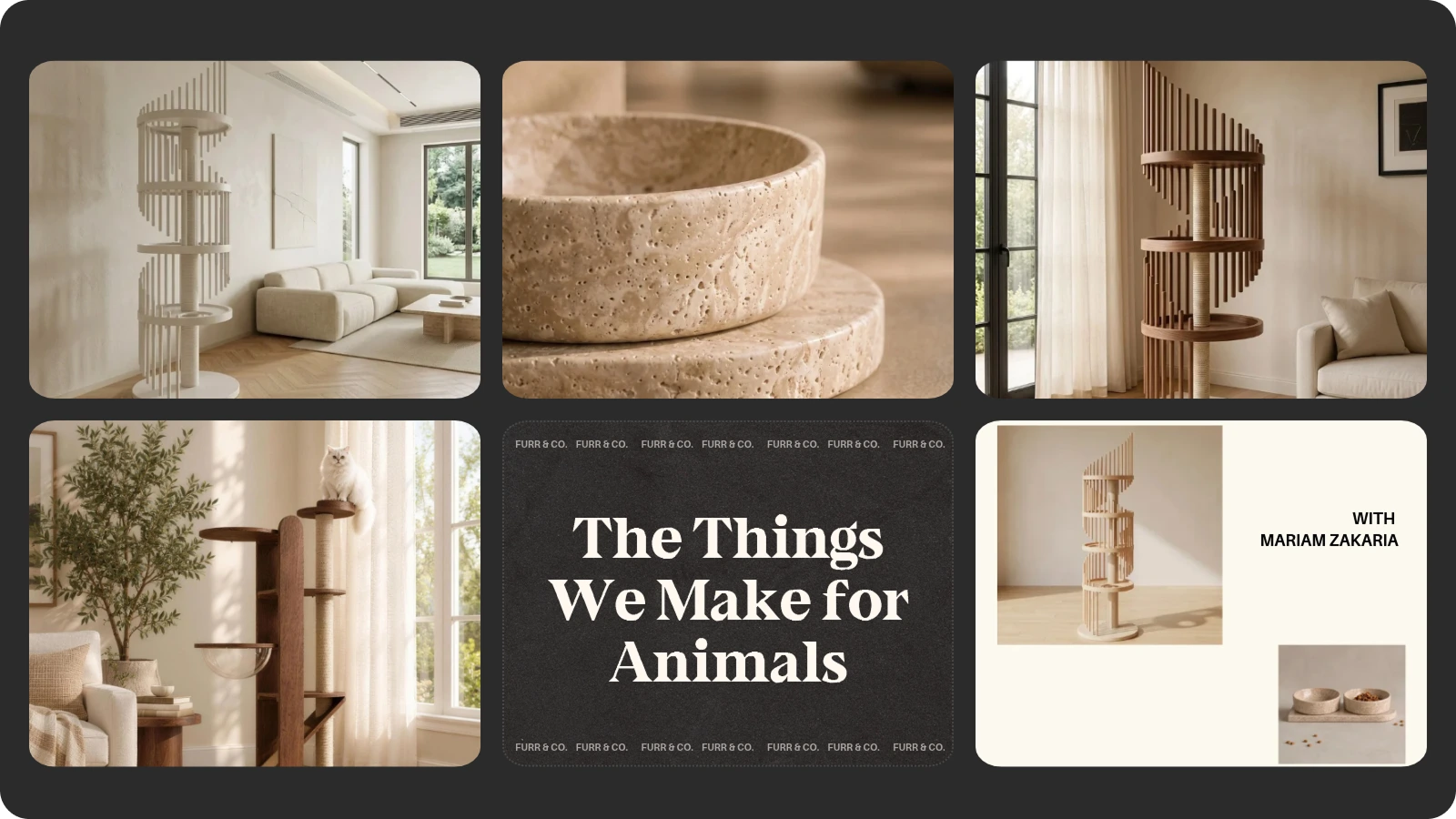
November 4, 2026
The Things We Make for Animals
Mariam Zakaria, the founder of Furr & Co., on designing furniture for cats and dogs, what happens when animals actually use it, and the spaces we share.
There’s a type of cat tree that everyone’s probably seen. You know the one: beige carpet, a couple of platforms, maybe a little hideaway. It does the job, but it’s not exactly something you’d choose for your living room. Mariam Zakaria had one of those cat trees, and after finishing a living room she was really proud of, she found herself cropping it out of every photo.
That little frustration eventually turned into Furr & Co., the Los Angeles-based furniture company Mariam founded in 2021. Her idea was to make furniture that meets animals’ needs while fitting naturally into the homes people have made for themselves. They design cat trees, dog beds, and feeding bowls using materials like oak, linen, and travertine.
Of course, cats and dogs don’t care much about how a piece of furniture looks. They’re more interested in climbing, scratching, sleeping, or pushing things around the floor. And sometimes, what looks good on paper doesn’t hold up when put to the test by its intended user.
Mariam shared her thoughts with us about designing for two very different kinds of occupants, what she’s learned about materials from animals, and why a dog’s bed deserves as much thought as the sofa next to it.

The cat tree
What started Furr & Co.?
Mariam: A cat tree. The beige carpeted kind. I had just finished a living room I was proud of, and there it was in the corner, and every photo I took of that room I found myself cropping it out. That bothered me more than it should have.
I spent about three years looking for something better. Not a cheaper version of the same thing, something I would have chosen even if I didn’t have a cat. I never found it. Furr & Co. came out of that gap.
Function and form
How do you design for both animals and people?
Mariam: They do pull in different directions, constantly. A cat wants height, a rough surface to drag its claws down, somewhere to hide, somewhere to see the whole room from. A person wants quiet lines and materials that match what’s already there.
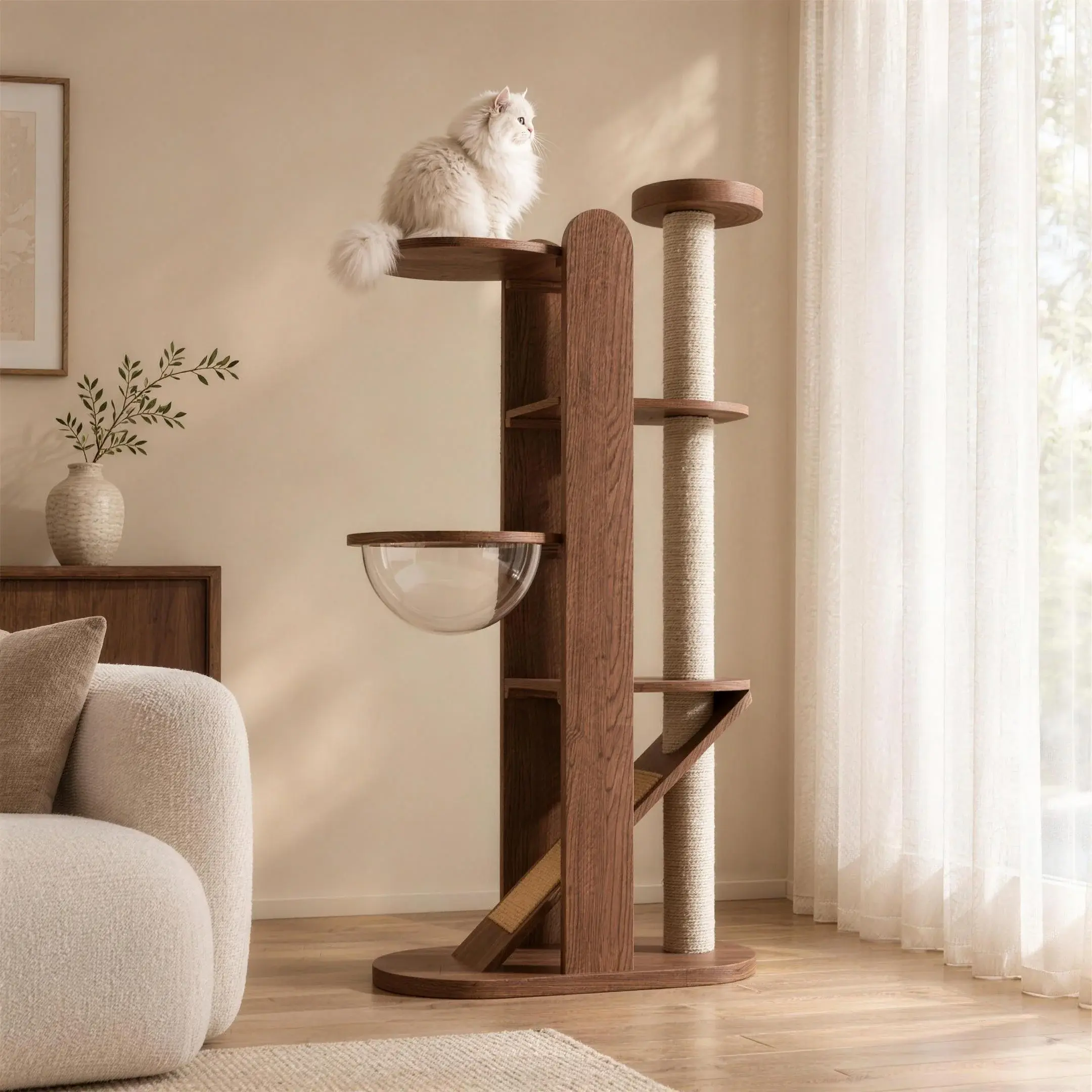
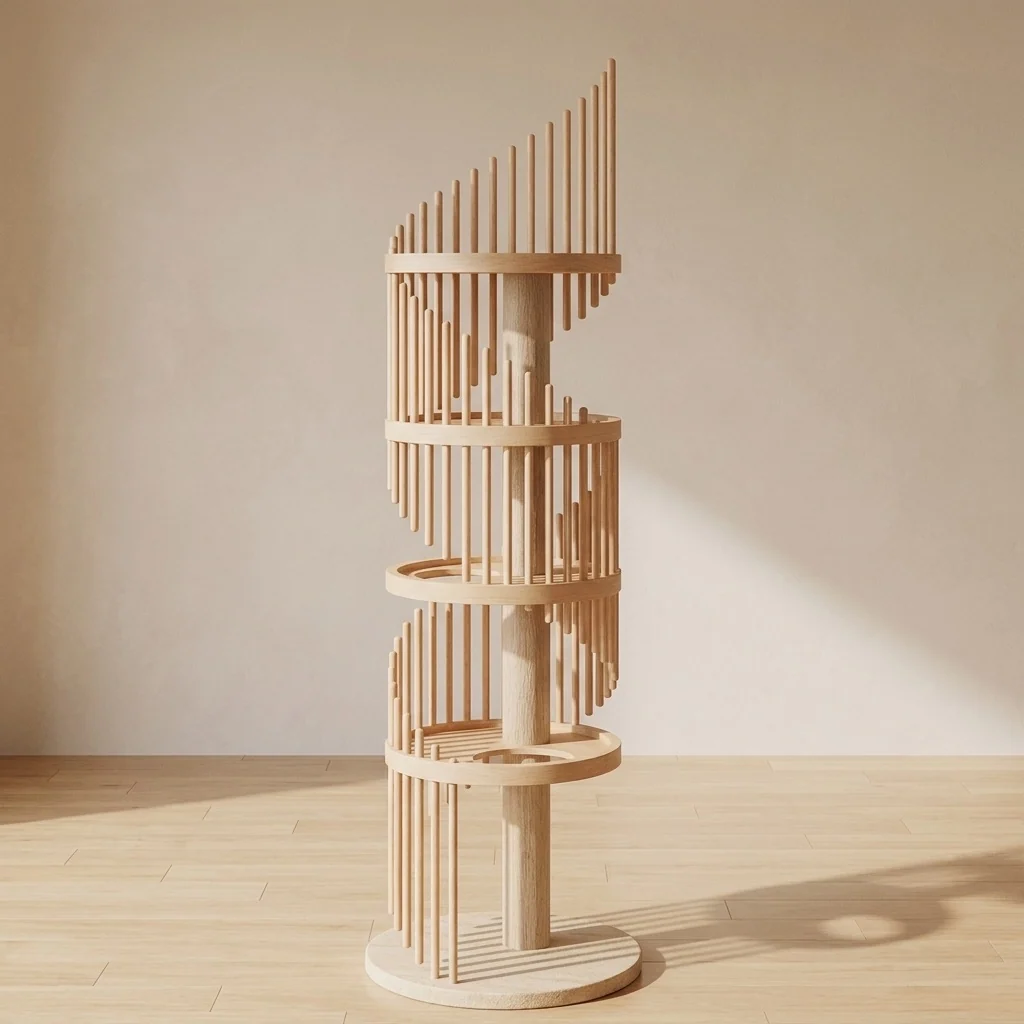
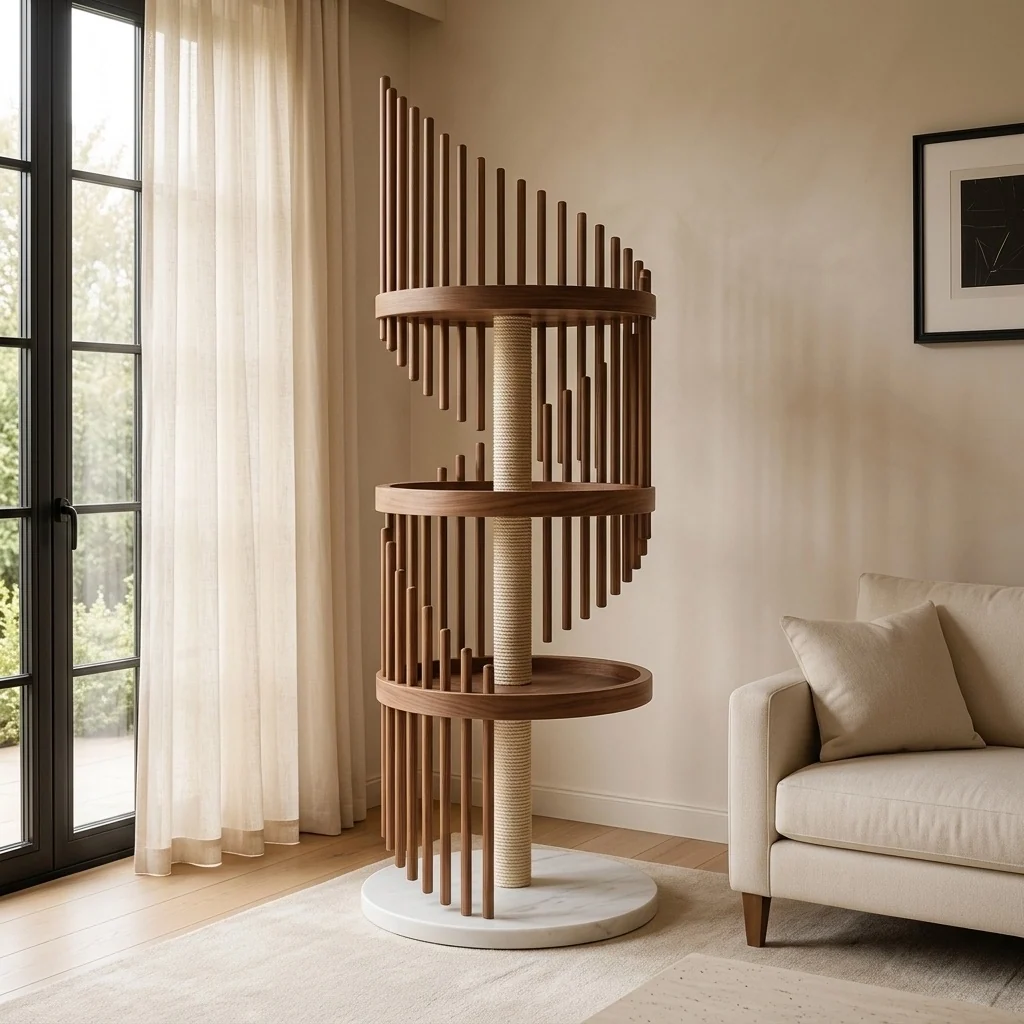
My rule is that the animal wins on function and the home wins on form. The Helix is the clearest example. The structure is what a cat actually needs, a spiral to climb, platforms to sit on, sisal to scratch. But the proportions, the oak, the way the tiers sit in a room, that’s all for the person. If I ever find myself cutting something the cat needs to make the piece prettier, I’ve gone the wrong way.
” My rule is that the animal wins on function and the home wins on form.
The materials
How do you choose materials that work for animals?
Mariam: I start from what I would put in my own home. Oak. Stone. Linen. Brass. Then I ask whether the animal will ruin it, and sometimes the answer is yes, and that’s the end of that idea.
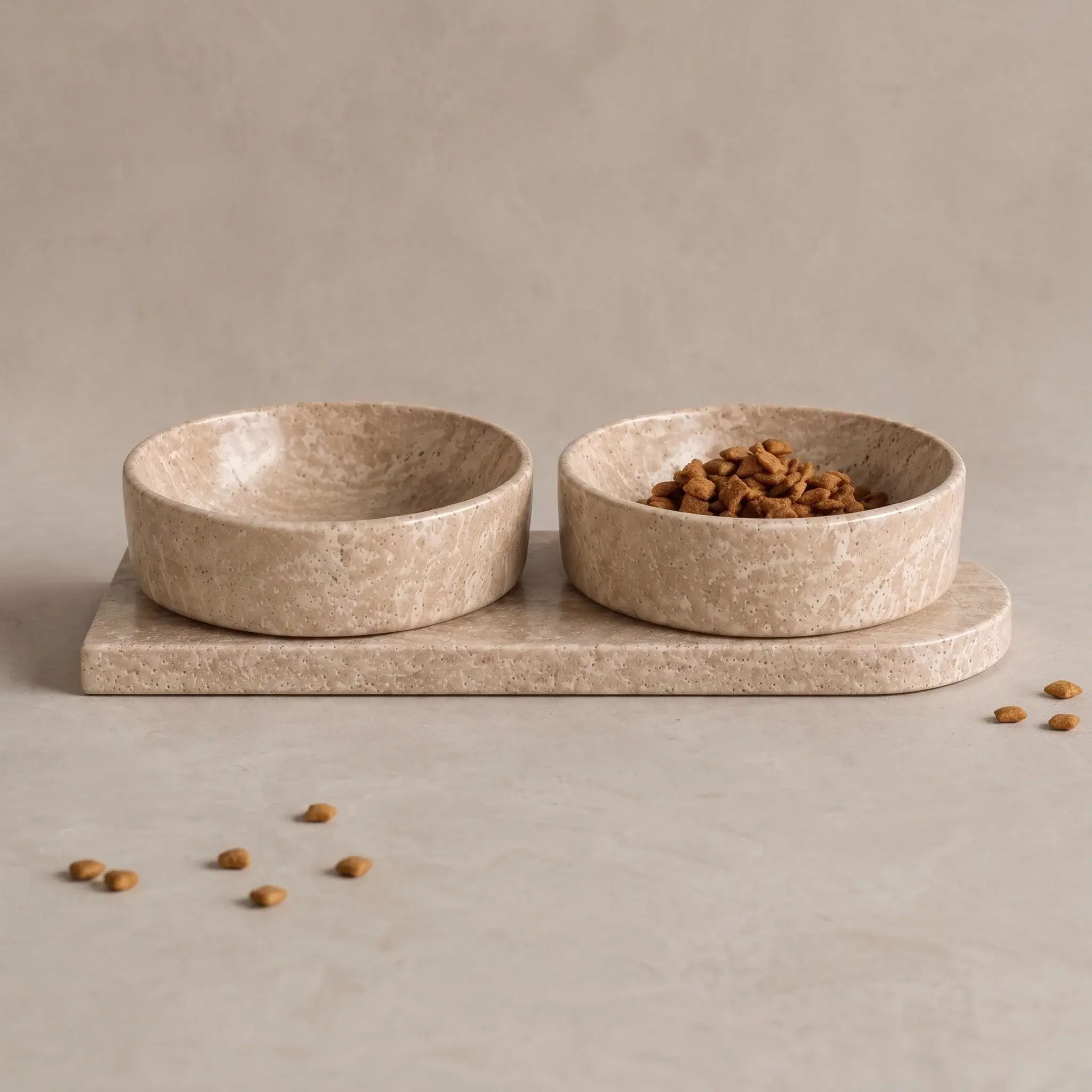
What I’ve learned is that animals are harder on materials than people are, and more honest about them. Cats find the one surface in a room that gives under their claws. Dogs lean into a bed edge every single night until it tells you whether the foam was good enough. The Travertine bowls are the easiest case. It’s Italian stone, it doesn’t scratch, it doesn’t hold smell, and it has the weight a bowl should have so it doesn’t skate across the floor. The hardest case is anything soft.
” Animals are harder on materials than people are, and more honest about them.
When animals disagree
Has an animal ever made you rethink a design?
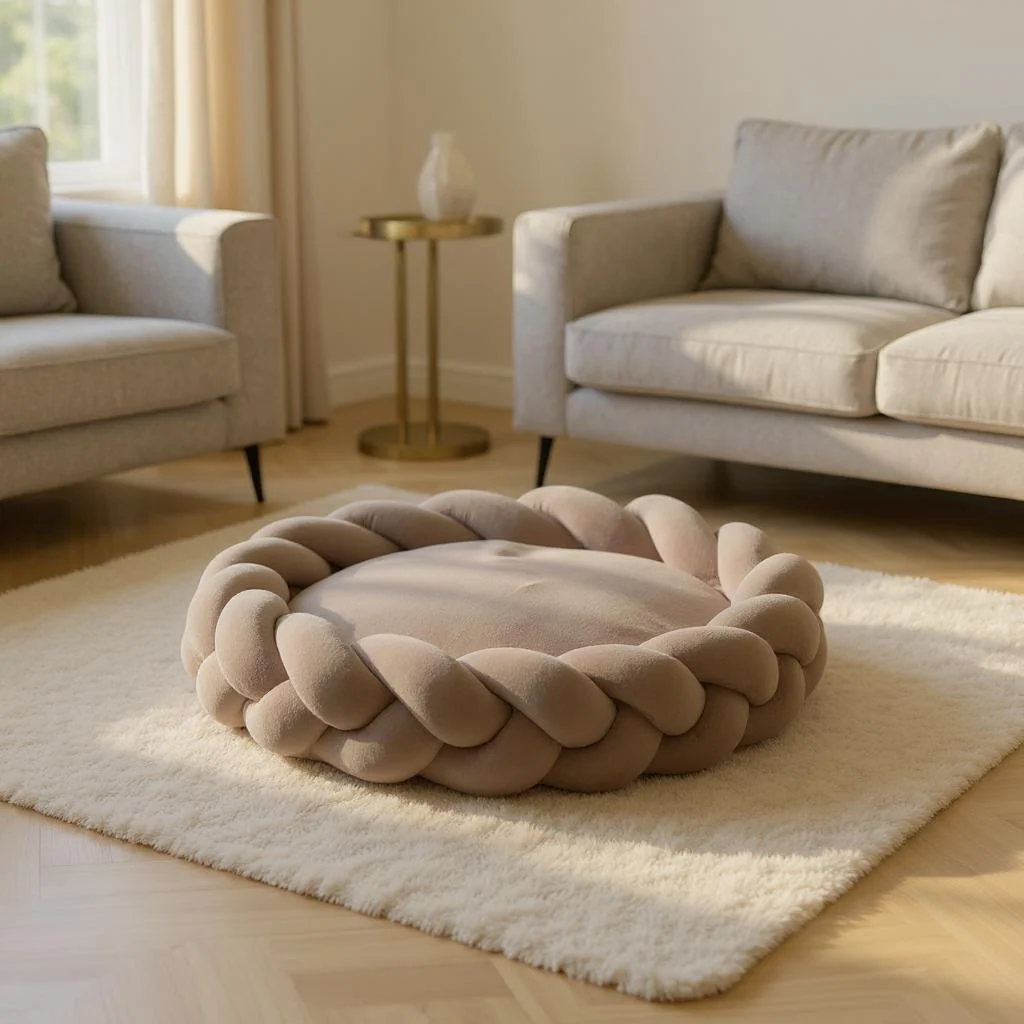
Mariam: Le Château, our dog bed. The first version had a bolster ring sitting loose on top of the cushion, so the cover could come off and go in the wash. Sensible on paper. Then we watched dogs actually get into it. They circle, they nose the bolster, they lean on one side, and the ring would shift. Owners told us the same thing. So we went back to the construction, which took longer than I wanted, and the new version has a thicker cushion and the bolster attached properly. It arrives in a few weeks.
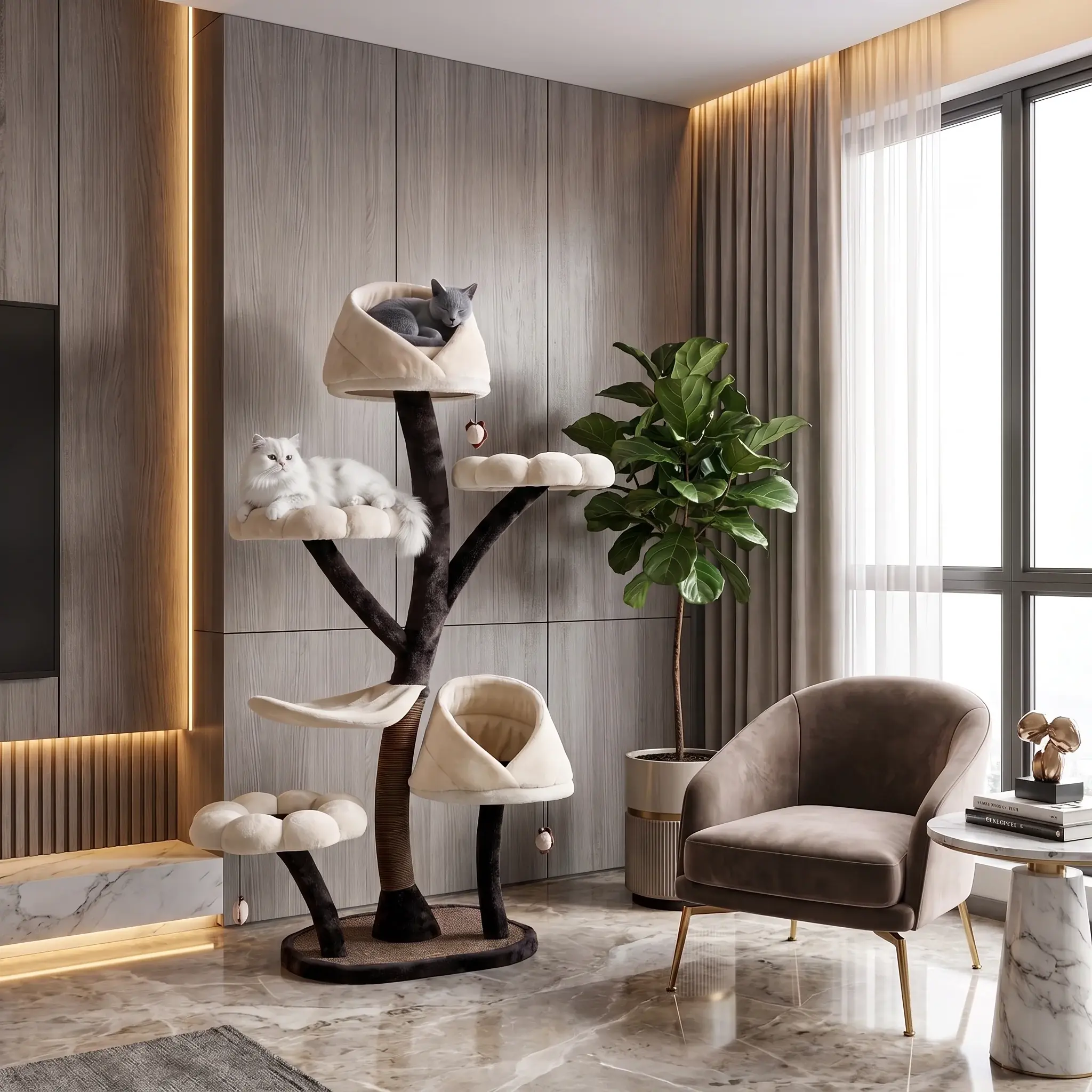
The other lesson came from the Aura, a tree with a scratching column. Some cats are gentle with it. Some cats treat it like a job and take the column down to the core in a few months. I used to see that as a problem. Now I think a scratched-through pole means the piece is being used exactly as intended, so we’re building a way to replace just that part rather than the whole tree.
Out in the world
What have customers shown you about how their animals use your furniture?
Mariam: The ones I love are the quiet ones. A photo of a cat asleep on the top tier of a Helix with the afternoon light coming across it, and nothing else in the frame. Those are the ones I keep.
The most unexpected was a cat boarding facility in the mountains of Tennessee who ordered ten of our beds at once. I had always pictured one piece in one home. Seeing a row of them in a place built for cats made me think about the brand a bit differently.
And the question I get asked most often, by far, is “can I see a video of a cat actually using it?” People want proof the animal will take to the piece before they commit to it. I understand that completely.
The shared room
Has designing for animals changed how you see people’s homes?
Mariam: I notice the compromises now. Walk into almost any living room with a pet in it and there’s one object that doesn’t belong, a plastic bowl, a fleece bed, a tower in the corner, and everyone in the house has agreed not to see it. I can’t un-see it anymore.
The other thing is that I’ve stopped thinking of the animal’s things as separate from the home. A dog’s bed is a piece of furniture. It takes up floor space, it’s in your sightline, it should be chosen with the same care as the sofa next to it. That sounds obvious written down. It took me a long time to actually live it.
Share this story
